After winning 36 medals in Portugal, the host nation is seeking a second consecutive world title through meticulous preparation and squad renewal. Technical director Mohamed Fawzy discusses the pressure of competing at home and the legacy he hopes to build for Traditional Karate.
By Paulo Pinto / Global Sports
Curitiba, September 10, 2026
Egypt will arrive at the 23rd ITKF World Championship in Cairo this October with two responsibilities: welcoming the international Traditional Karate community and defending the top spot it secured in Portugal in 2024. For Mohamed Fawzy, technical director of the Egyptian national team, the crowd’s support must translate into confidence on the tatami, while the title must drive the continued development of a programme that cannot afford to become complacent.
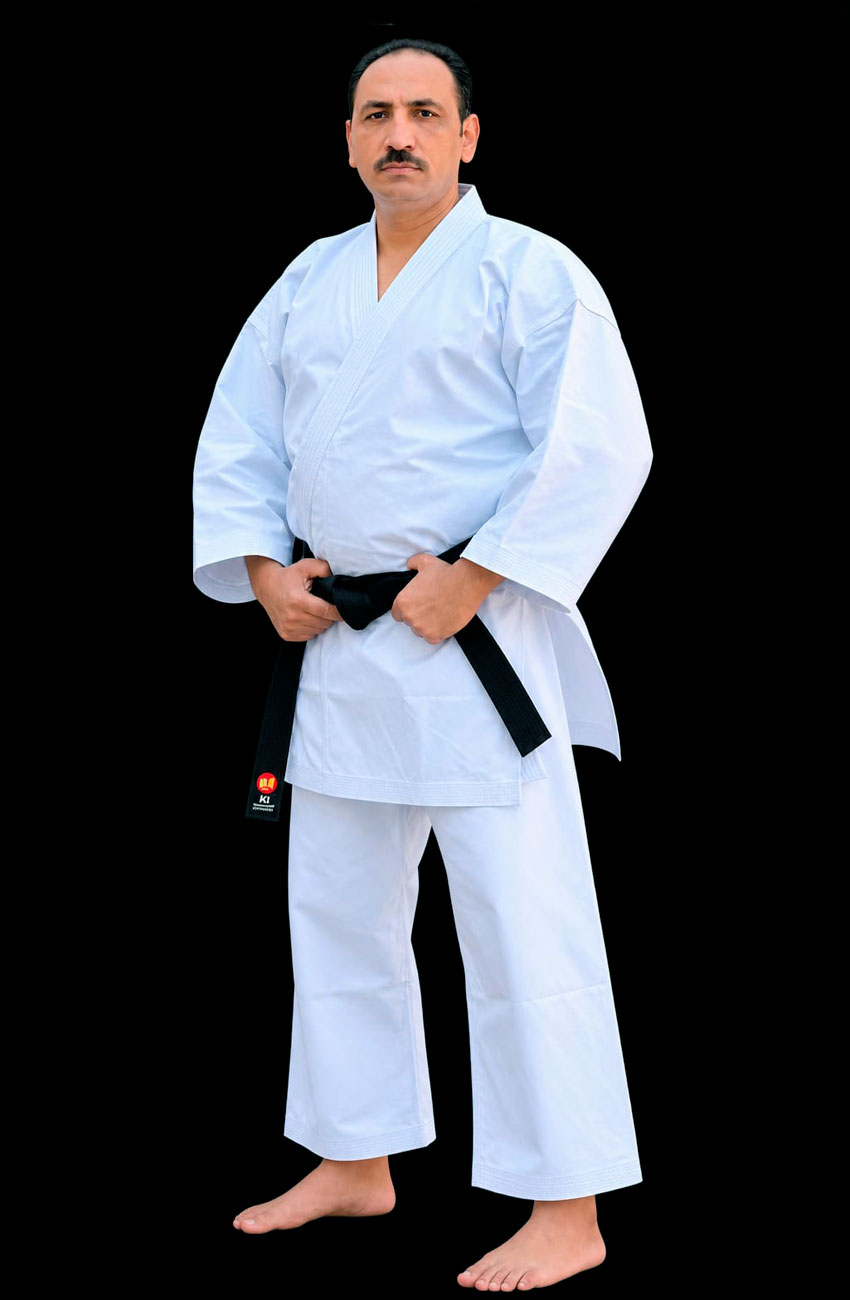
Sensei Mohamed Fawzy, roku-dan (6th dan) and technical director of the Egyptian Traditional Karate national team © ETKF
The victory in Vila do Conde put Egypt at the top of the overall medal table with 14 gold, ten silver and 12 bronze medals. Brazil finished second with 13 gold, eight silver and six bronze, followed by Poland with six gold, seven silver and 12 bronze. Romania placed fourth with four gold, eight silver and 14 bronze, while Portugal completed the top five with three gold, three silver and nine bronze.
These are the national teams Revista Budô and Global Sports are following in their interview series on preparations for the World Championship in Cairo. After Romania, with Cornel Mușat, and Portugal, with Marco Silva, the focus now turns to the hosts and reigning champions.
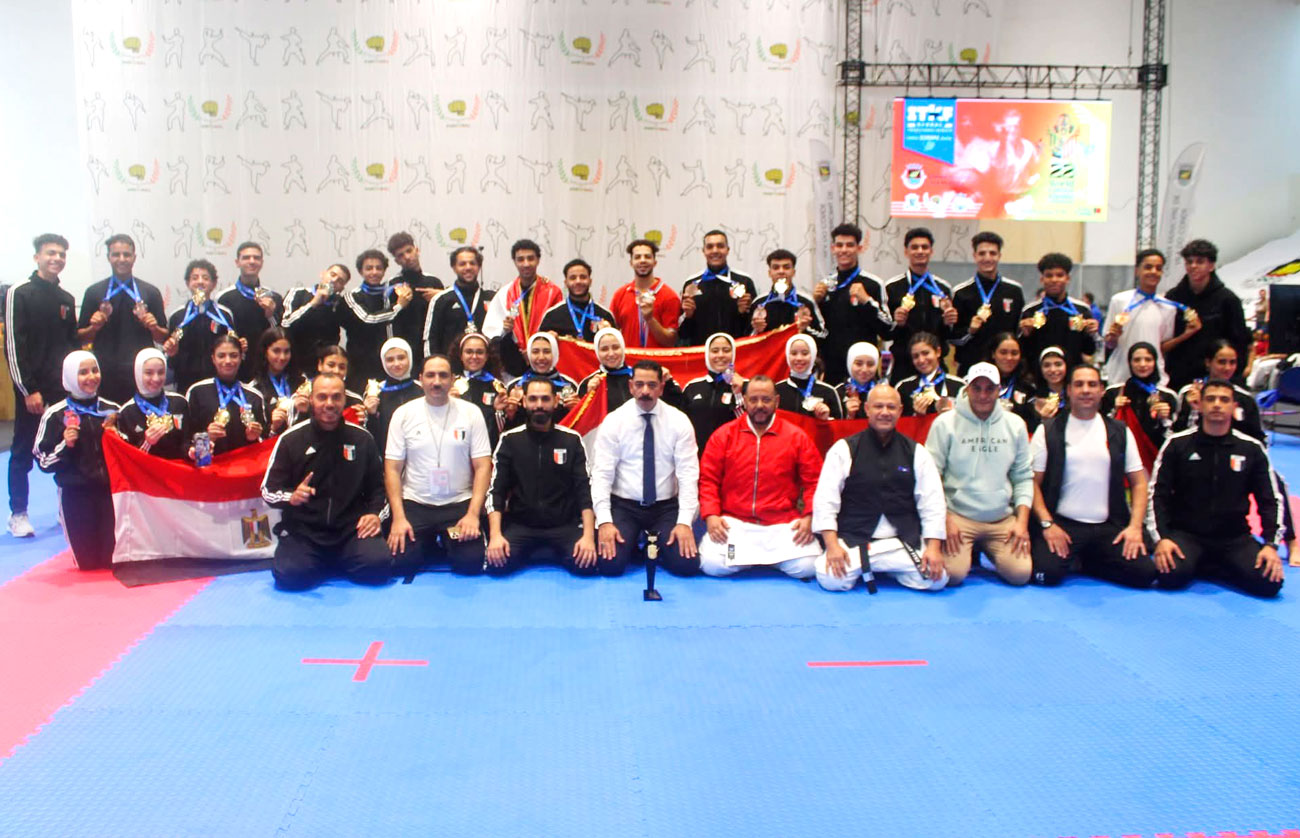
The Egyptian national team with the trophy awarded for winning the 2024 Traditional Karate World Championship in Portugal © ETKF
Also a member of the International Traditional Karate Federation’s Supreme Technical Committee, Fawzy describes a national team seeking to balance experience with renewal. Past success deserves recognition, but does not guarantee selection: performance, discipline and the ability to respond to pressure will guide those decisions.
In this interview, the technical director explains what has changed since Portugal, assesses the main rivals and connects the pursuit of a second consecutive world title to a broader goal: attracting young people, strengthening clubs and expanding opportunities for the development of Traditional Karate in Egypt and the surrounding region.
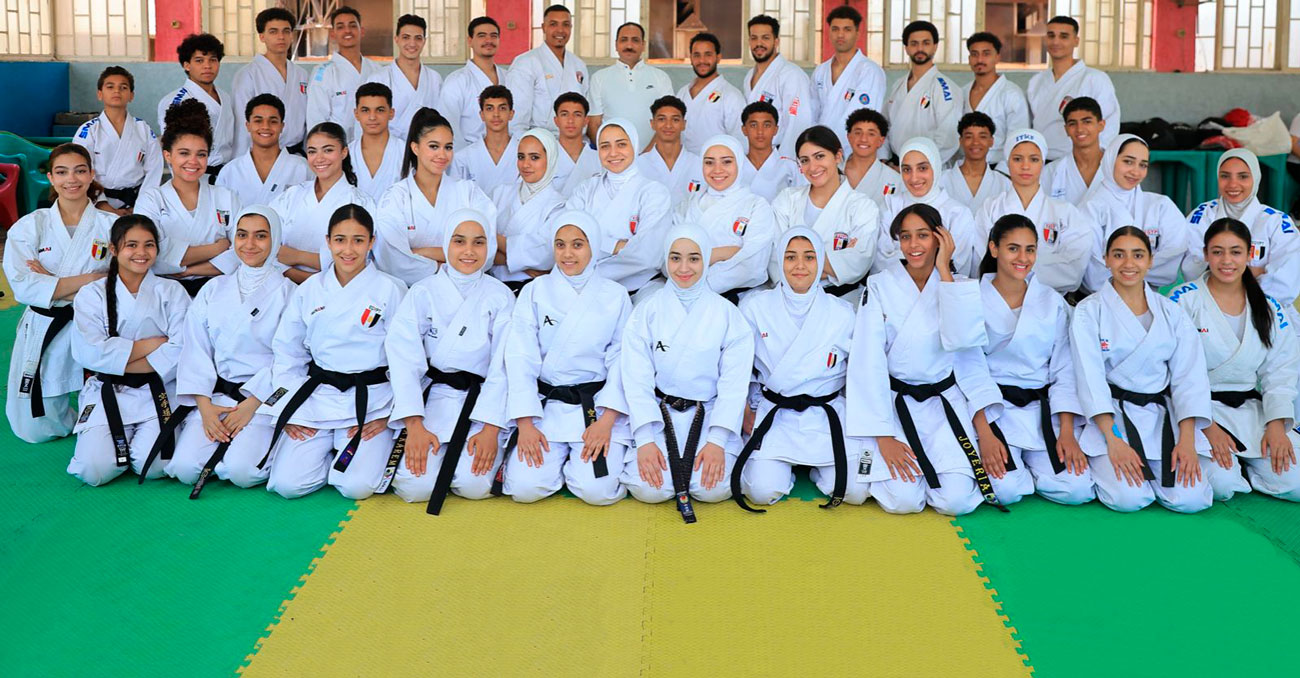
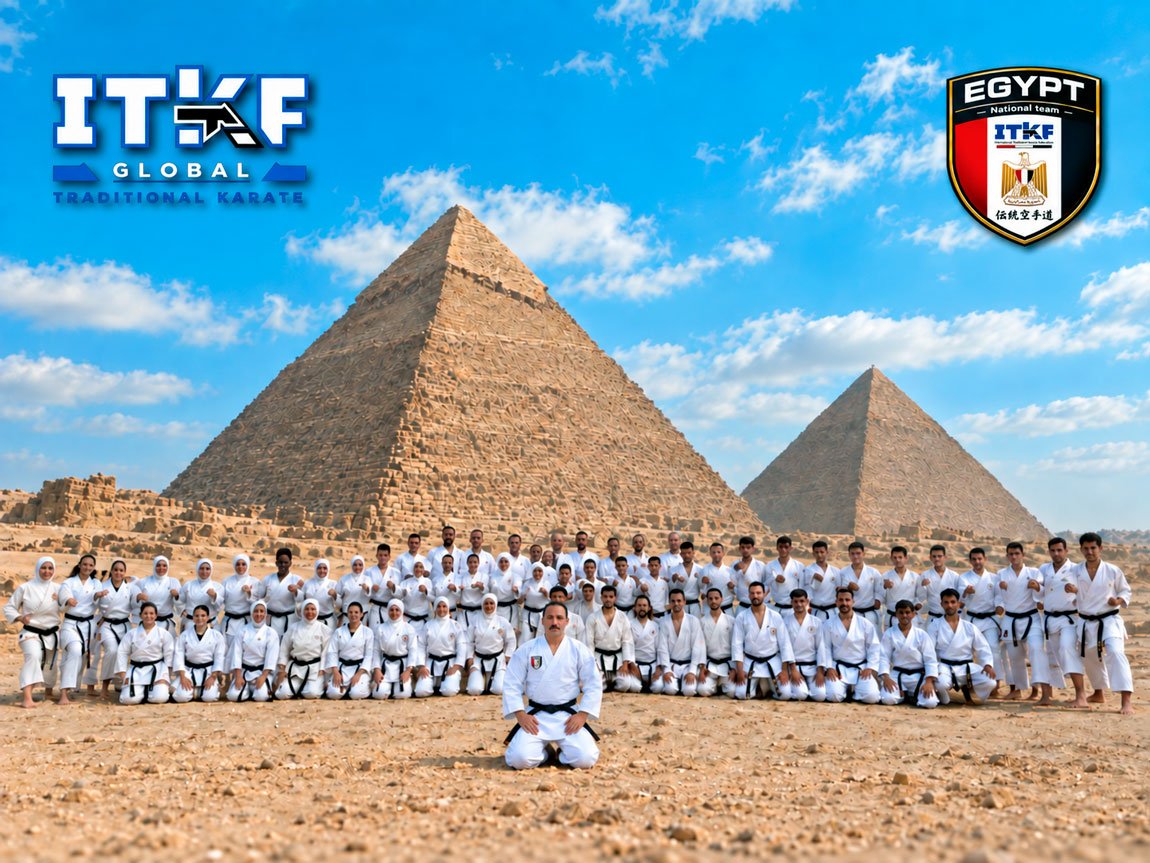
The Egyptian Traditional Karate national team together in 2026 © ETKF
WHAT DID THE 2024 WORLD TITLE MEAN FOR EGYPTIAN TRADITIONAL KARATE?
We welcomed the 2024 victory with immense pride, but also with the understanding that a world title is not the end of a journey: it is a new responsibility. Finishing first in Portugal with 36 medals, 14 gold, ten silver and 12 bronze, was a milestone for Egyptian Traditional Karate.
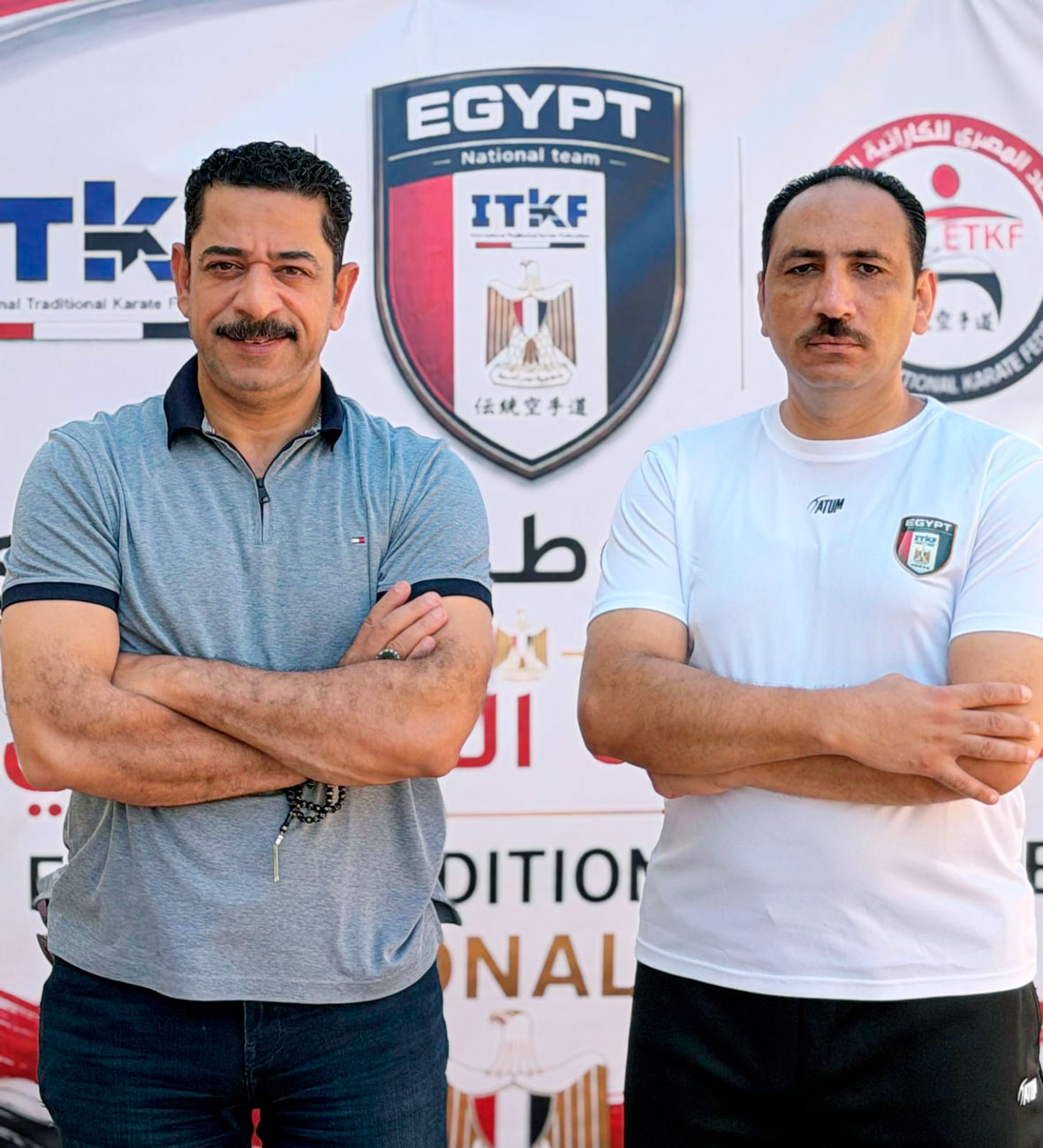
Ramy El-Mekkawy, chairman of ITKF Africa and president of the Egyptian Traditional Karate Federation, with Mohamed Fawzy, technical director of the Egyptian Traditional Karate national team © ETKF
For the athletes, it confirmed that disciplined preparation, technical commitment and confidence in their own abilities can take Egypt to the highest level. For the coaching staff, it validated the work done behind the scenes while also raising the standard we need to maintain.
Historically, the title demonstrated that Egypt can contend for world leadership in Traditional Karate and build a lasting culture of high performance, rather than relying on isolated individual achievements.
WHAT WAS DECISIVE IN WINNING 14 GOLD MEDALS AND FINISHING AHEAD OF YOUR MAIN RIVALS?
I would not reduce that success to a single moment or athlete. The decisive factor was the consistency of our technical approach throughout the competition. We worked on discipline, tactical clarity, quality of execution and the ability to manage each contest according to its demands and difficulties.
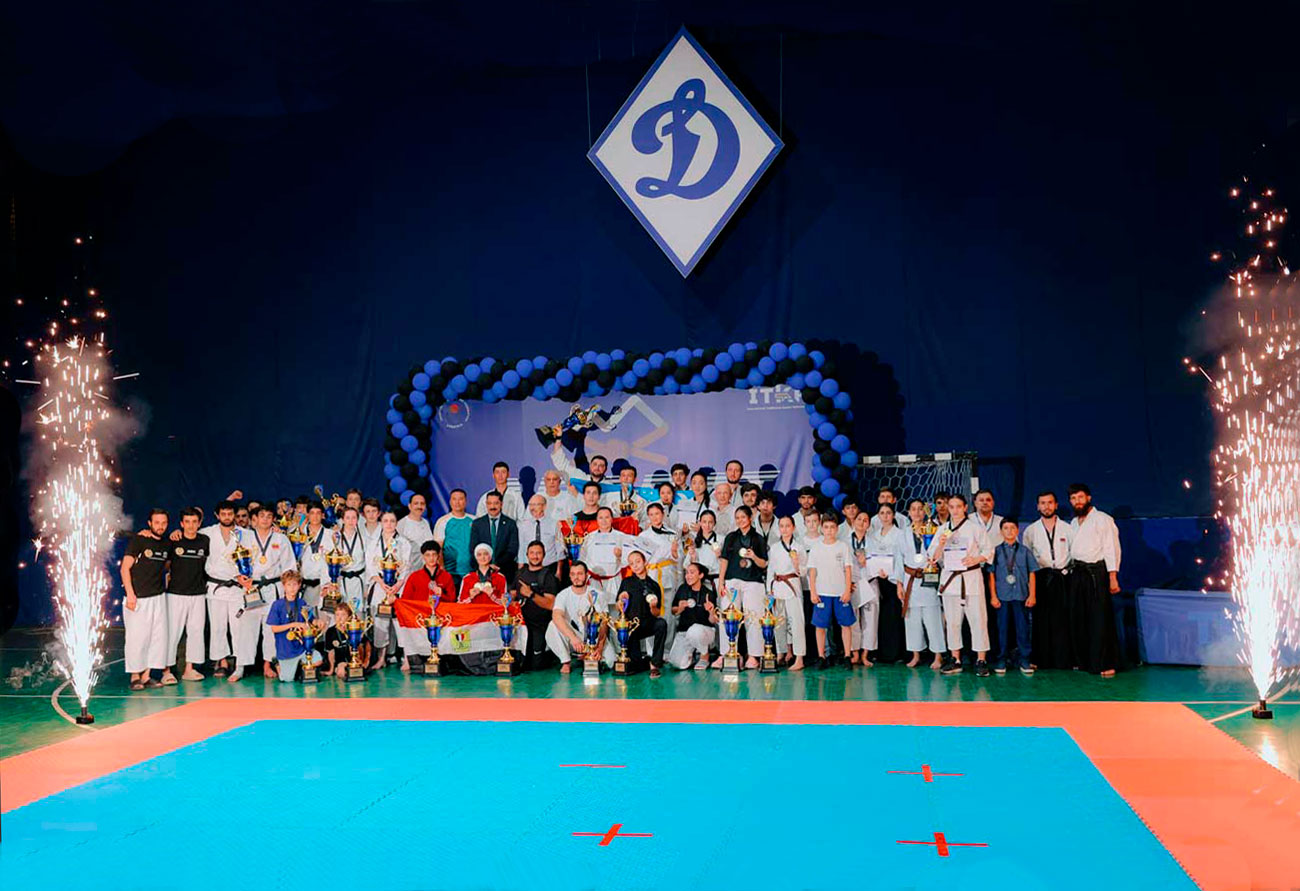
The Egyptian delegation at the 2026 Ararat Cup in Armenia © ETKF
Equally important was our insistence that every athlete enter the competition with a clear technical identity and an exact understanding of what they needed to do. The 14 gold medals were the result of collective preparation and attention to detail, not a single tactical decision.
WHAT DID YOU RETAIN AND WHAT NEEDED TO EVOLVE IN YOUR PREPARATION AFTER THE TITLE?
The victory did not lead us to abandon the principles that had worked, but to examine them more critically. We maintained the discipline of the preparation process, the emphasis on technical fundamentals, systematic assessment and the importance of competitive experience.
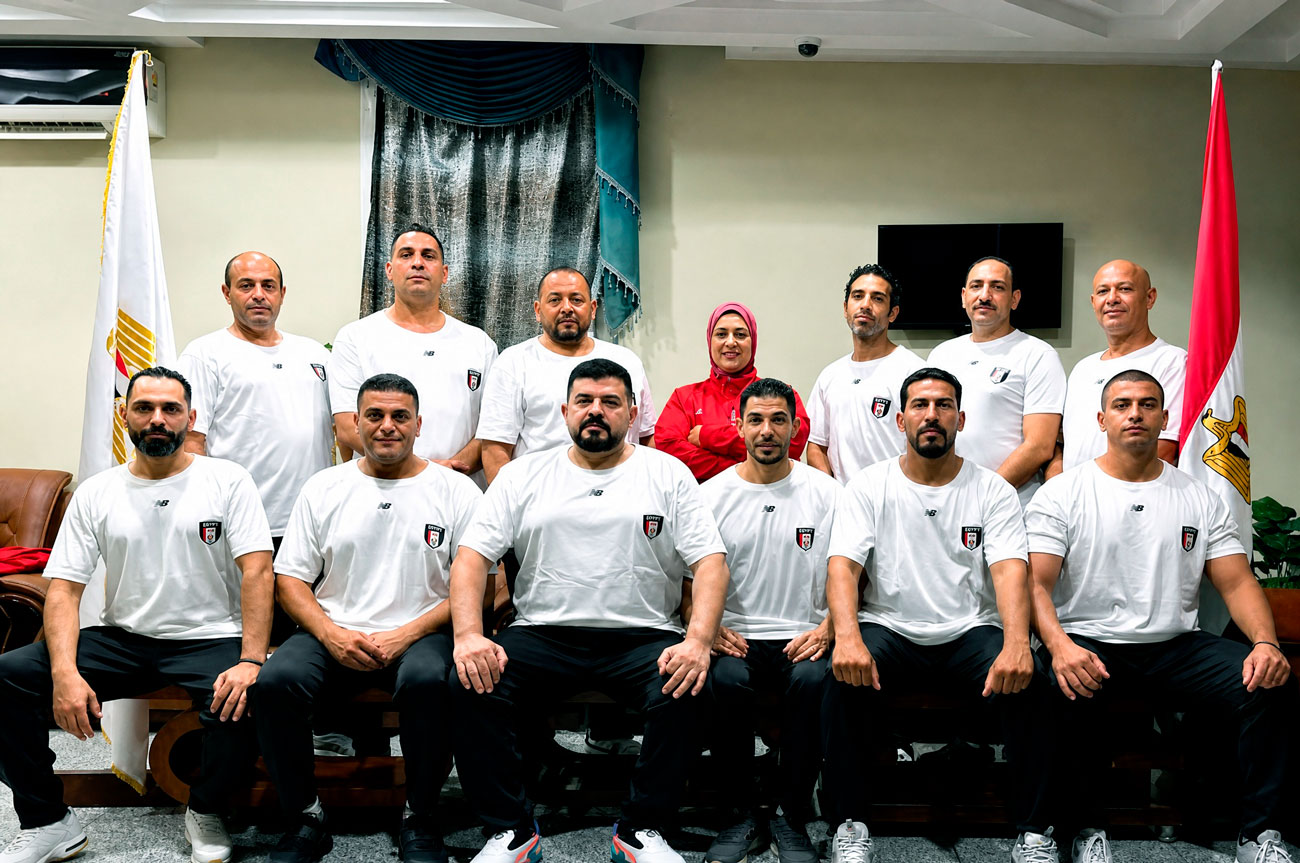
The Egyptian Traditional Karate national team’s coaching staff for the World Championship in Cairo © ETKF
What evolved was the level of detail and the demands we place on performance standards. When you become world champion, opponents begin to study you differently, and your own athletes start competing under greater expectations.
Our task is to preserve what works and continually improve technical precision, tactical adaptation, physical preparation and the ability to deal with the psychological challenges of competition.
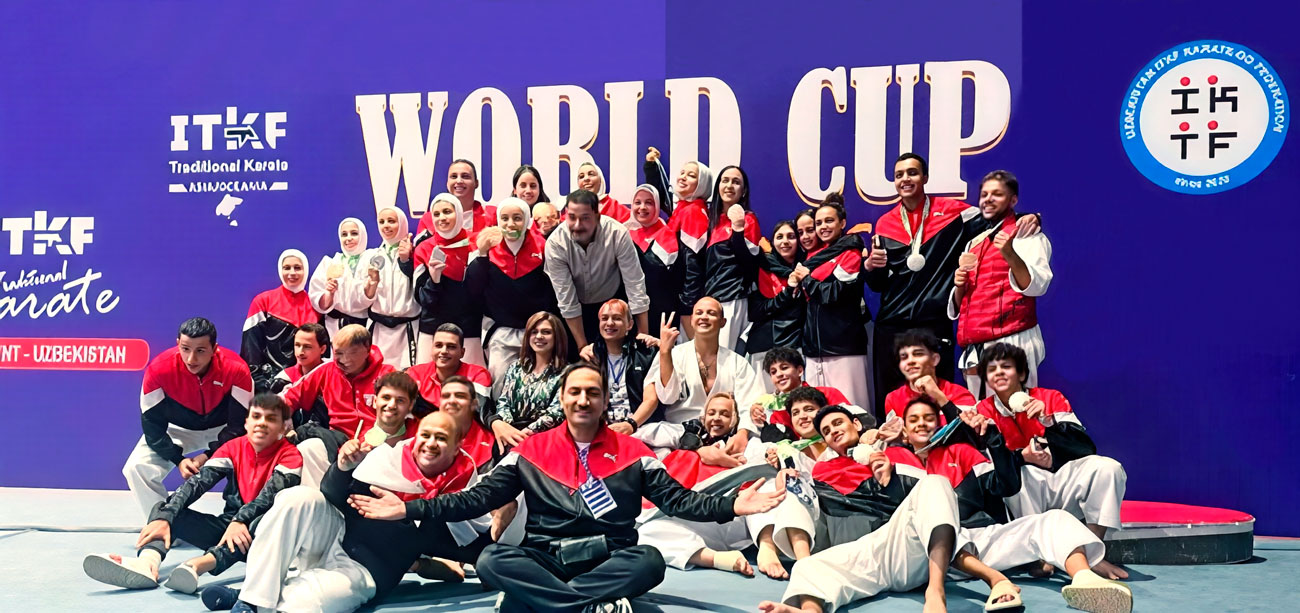
The Egyptian national team takes first place at the 2023 World Cup in Uzbekistan © ETKF
HOW ARE PREPARATIONS FOR CAIRO ORGANISED, AND WHAT IS PLANNED FOR THE FINAL STRETCH?
We treat preparation as a progressive cycle of performance development, with the aim of arriving at the World Championship in Cairo in the best possible condition, rather than simply completing a heavy training workload.
The final phase should focus on refining technical execution, competition-specific tactics, intensity management, recovery and psychological preparation.
“Our ambition, therefore, is not just to win championships, but to help build the future of Traditional Karate.”
Training camps and preparatory competitions are important because they allow us to test athletes under pressure, identify technical gaps and make the final adjustments. Any exchanges or international appearances will be used strategically, prioritising the quality of preparation over the number of events.
The schedule and details of participation will be confirmed through official technical and administrative procedures.
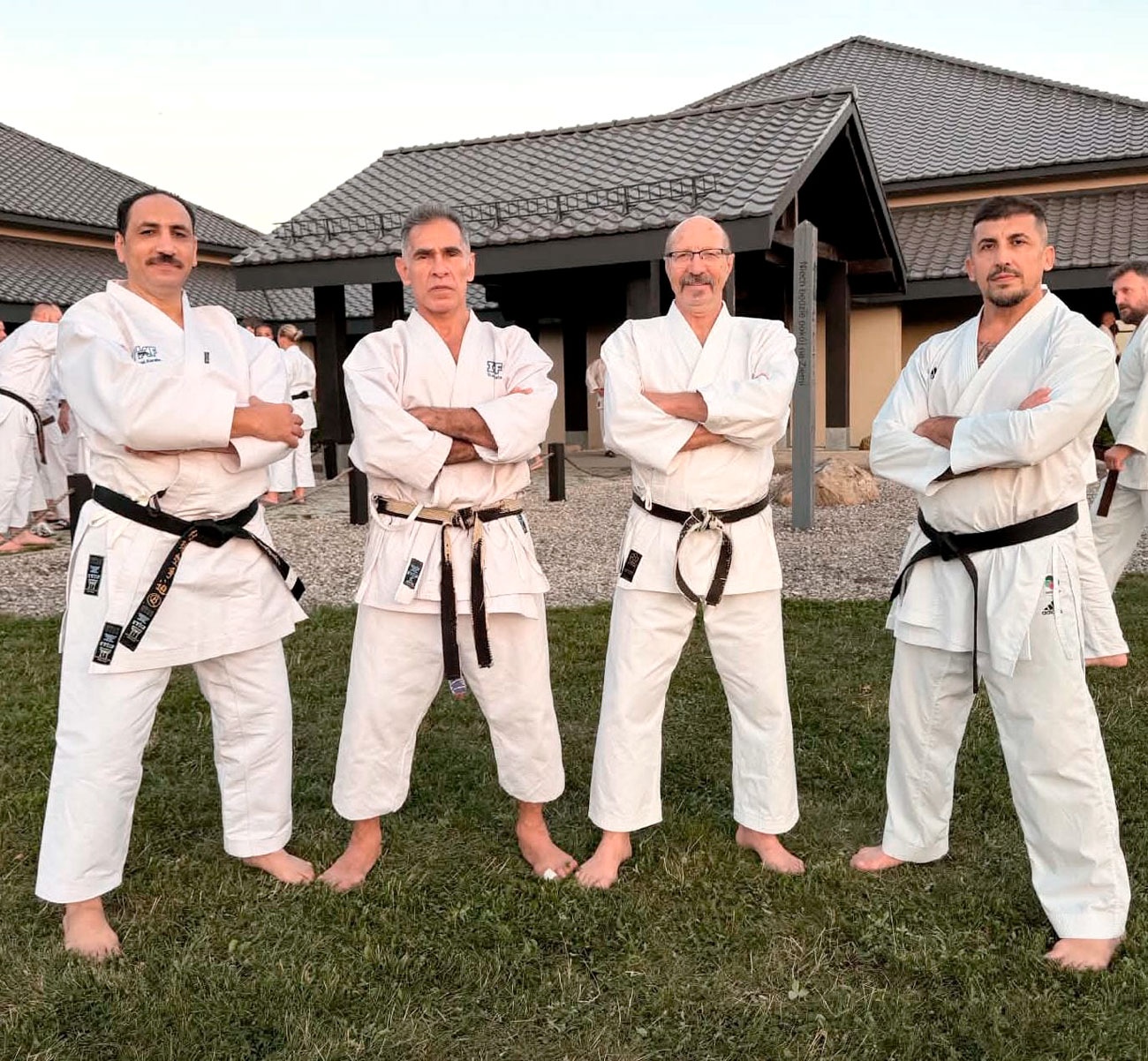
Instructors Mohamed Fawzy, Justo Gomez, Gilberto Gaertner and Cornel Mușat at the gasshuku held in August at the European Budo Centre – Dojo Stara Wieś, Poland © ETKF
WHAT CRITERIA WILL DETERMINE SELECTION? WILL THERE BE CHANGES TO THE CHAMPIONSHIP-WINNING TEAM?
Selection must take into account performance, consistency, technical level, competitive readiness, discipline and the ability to execute under pressure. World champions deserve recognition for what they have achieved, but selection cannot be based on reputation alone.
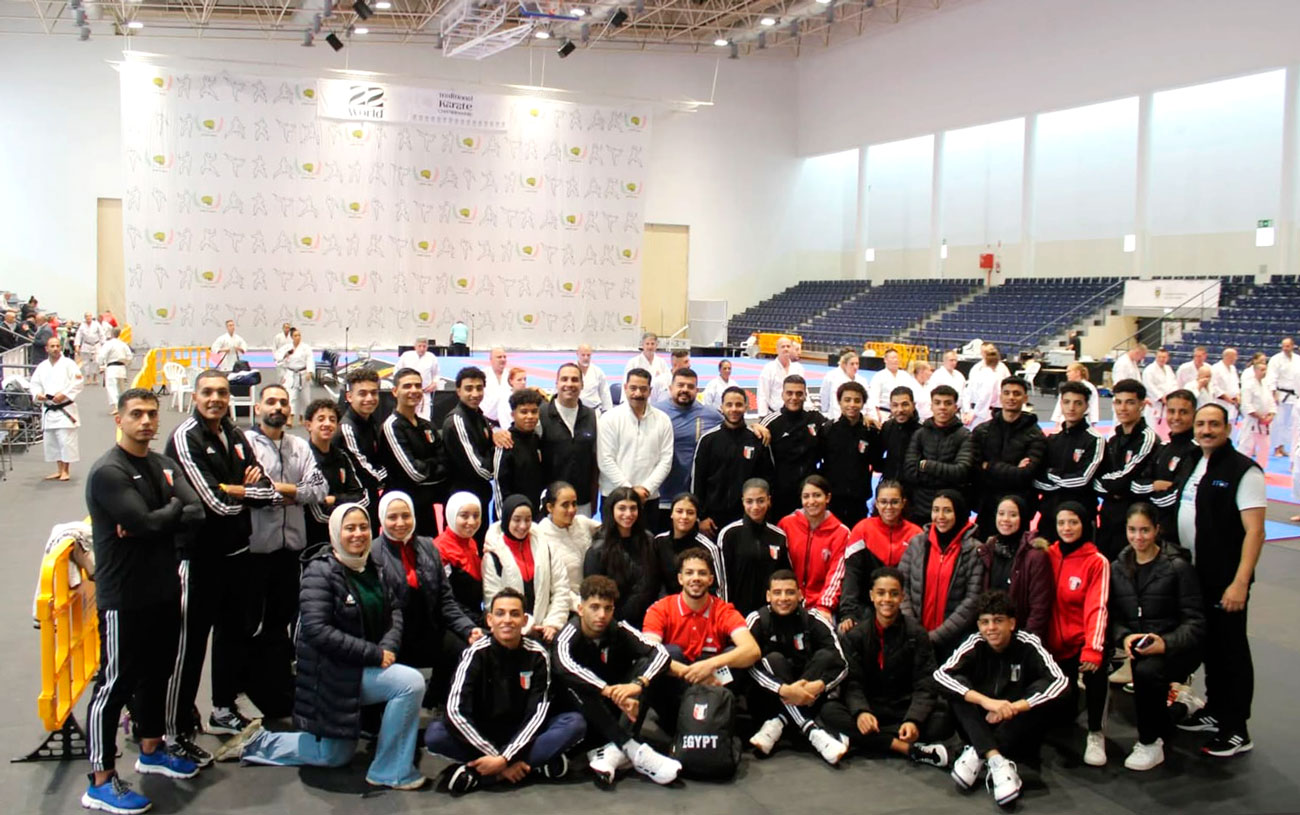
The Egyptian national team in Vila do Conde, Portugal, during the 2024 World Championship © ETKF
At the same time, renewal is important, because a strong national team must continually develop new athletes capable of competing at the highest level.
We seek that balance: preserving the experience and winning mentality of athletes who have already demonstrated their ability, while offering genuine opportunities to those who prove they can strengthen the team in 2026.
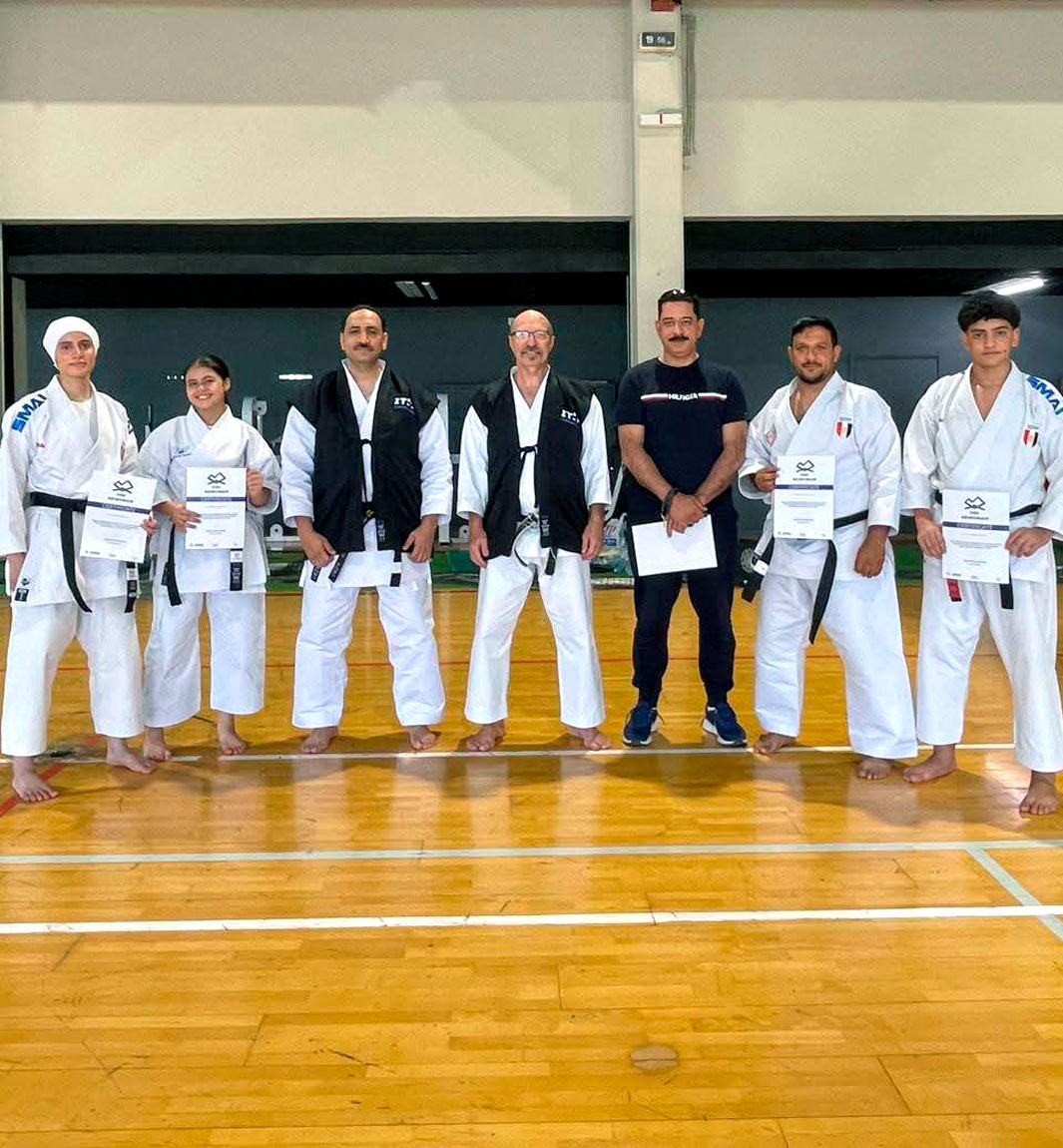
The Egyptian national team with Mohamed Fawzy, the national team’s technical director, shihan Gilberto Gaertner, ITKF chairman, and Ramy El-Mekkawy, chairman of ITKF Africa and president of the Egyptian Traditional Karate Federation © ETKF
HOW LARGE WILL THE DELEGATION BE, AND HOW IS THE STAFF ORGANISED?
As technical director, I believe it is important to distinguish the sporting objective from numbers that depend on final registration and official approval. The total number of Egyptian athletes has yet to be announced, but we can already present the composition of the coaching staff and support team.
I would not want to release preliminary numbers or athletes’ names that might subsequently change. What I can emphasise is that the delegation will be organised to provide the technical, administrative, medical and logistical support required at a World Championship held in Egypt.
Technical and Administrative Staff
Mohamed Fawzy Ali – Head of the staff and technical director
Abdel Fattah Ahmed Hassan – Head coach
Sherif Abdel Nabi Abu El-Saoud – Technical director for kata
Islam Mohamed Osman – Technical director for kumite
Dr. Ayman Shaaban Younis – Technical director for training load planning
Islam Fayek El-Kamar – Coach
Mohamed Samir – Coach
Awad Mahdy – Coach
Shady Mohamed – Coach
Mohamed Rifai – Administrative director
Supreme National Team Supervisory Committee
Dr. Rami El-Mekkawy – General supervisor of the national team
Ibrahim El-Masry – Technical supervisor of the national team
Prof. Dr. Amal Farouk Salem – Physical and psychological supervisor of the national team
Eng. Mohamed Mostafa Abdel Nabi – Administrative supervisor of the national team
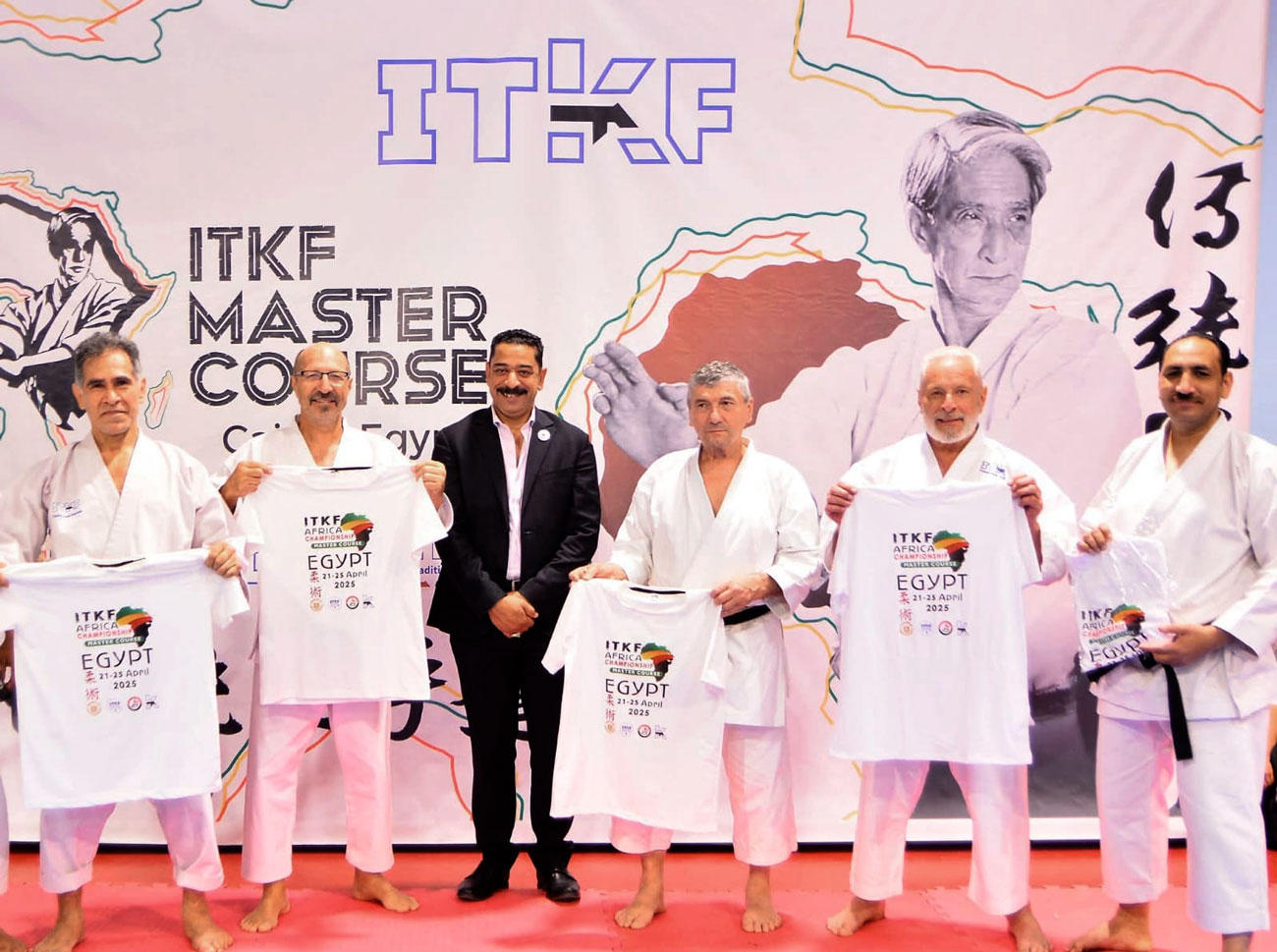
The ITKF Global Technical Committee during the 2025 Master Course held in Egypt © ETKF
WHICH ATHLETES ARE EMERGING AS EGYPT’S LEADING CONTENDERS FOR THE WORLD CHAMPIONSHIP?
The Egyptian team has a strong group, with experienced competitors and emerging talent. However, the final list of athletes, categories and events for Cairo depends on the approved selection and official entries.
I prefer not to release names or define each athlete’s participation before that process is complete. Accuracy is essential, and categories may change according to the committee’s decisions and official registration.
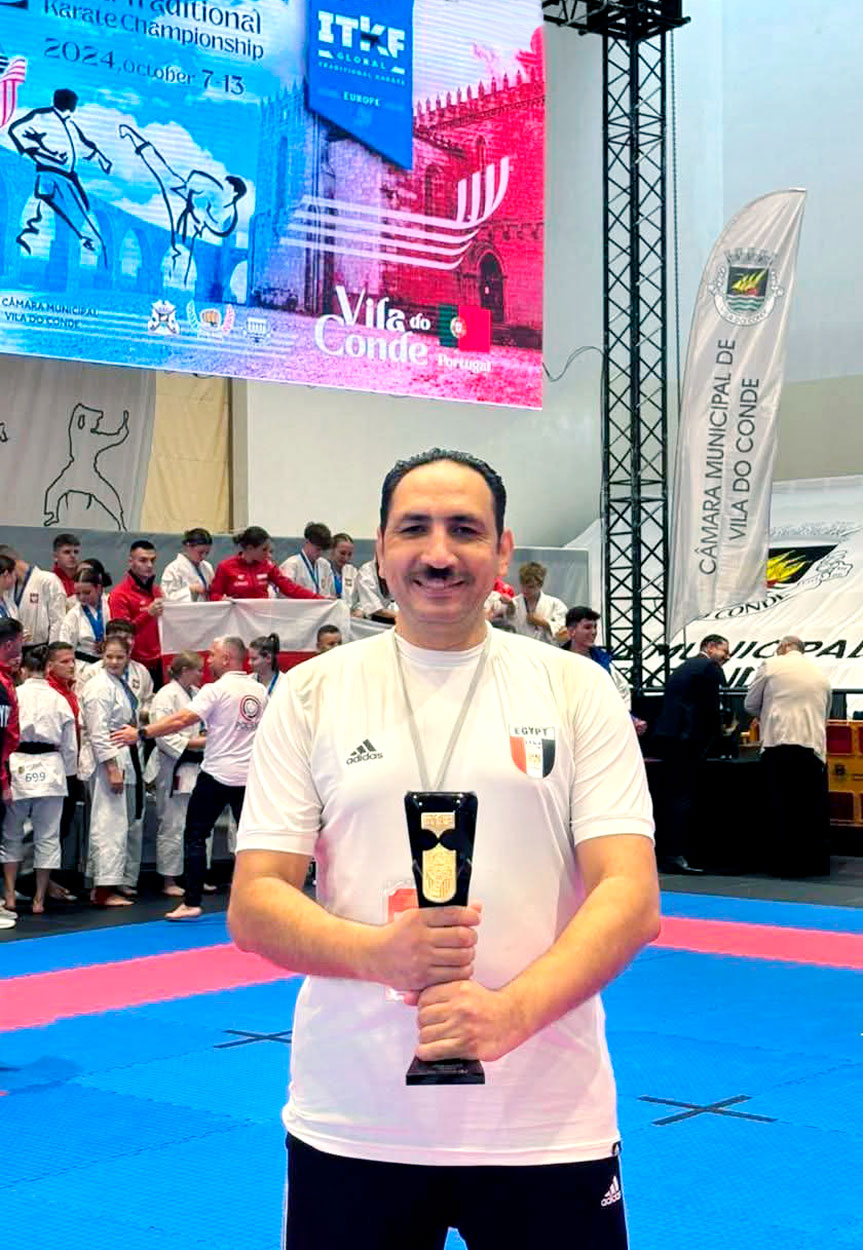
Mohamed Fawzy displays the overall championship trophy from the 2024 World Championship in Portugal © ETKF
Our philosophy is to build a team in which world-class athletes and new competitors complement one another, giving Egypt competitiveness in the present and a solid outlook for the future.
HOW DO YOU ASSESS BRAZIL, POLAND, ROMANIA AND PORTUGAL? WHAT WILL BE THE BIGGEST CHALLENGE IN DEFENDING THE TOP SPOT?
These teams represent a very high level of competition, and we respect the development and experience of each one. Brazil, Poland, Romania and Portugal have strong competitive cultures, and we expect them to arrive in Cairo highly motivated and technically prepared.
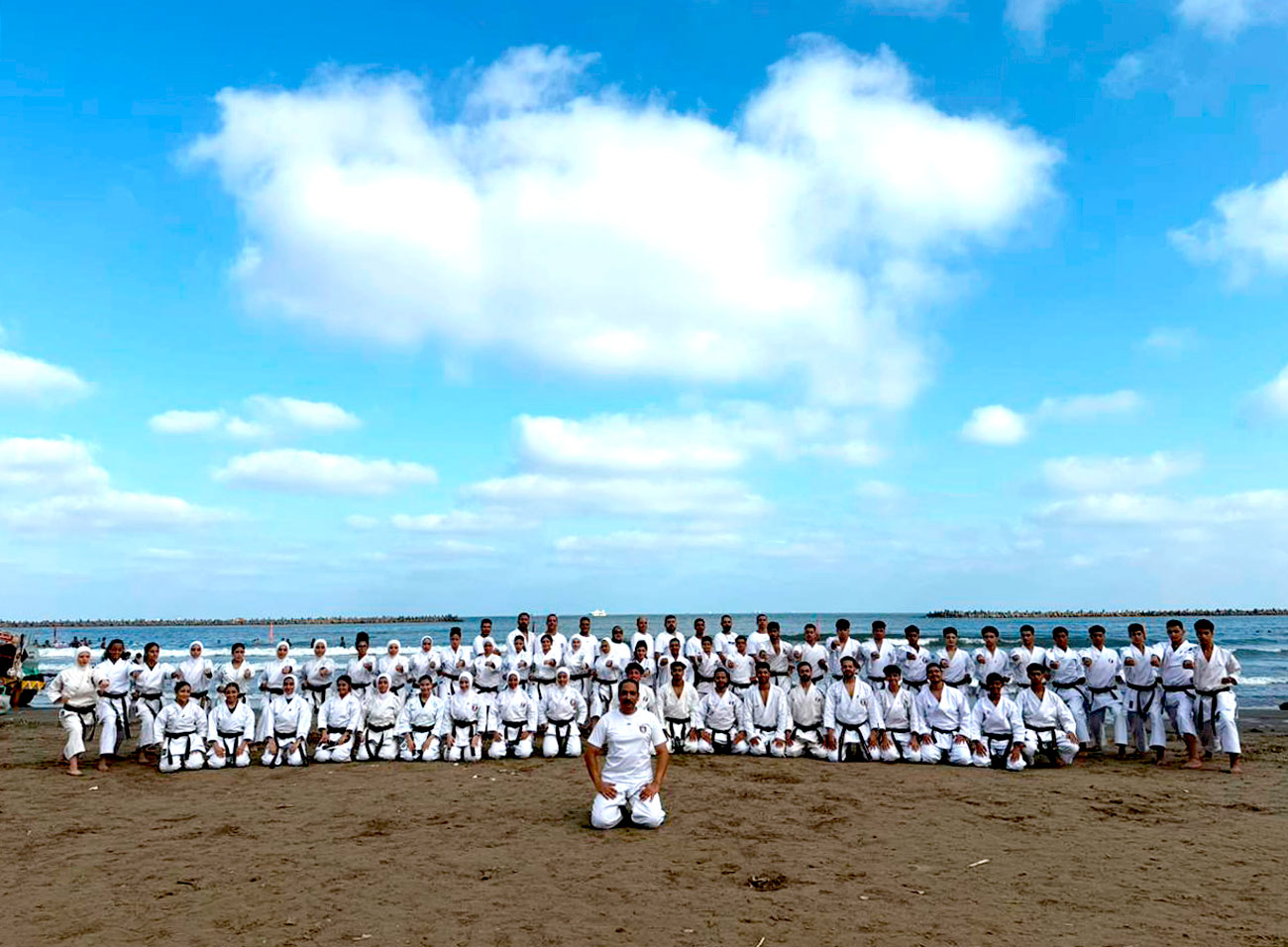
The Egyptian Traditional Karate national team during a beach training session © ETKF
For Egypt, the main challenge is not simply to repeat the 2024 result. It is to perform well under greater expectations, against opponents who have had two years to analyse the previous World Championship.
We need to evolve without becoming complacent. Technical consistency, tactical adaptation, the strength of the team across the different events and the ability to manage decisive moments will be fundamental in our attempt to defend first place.
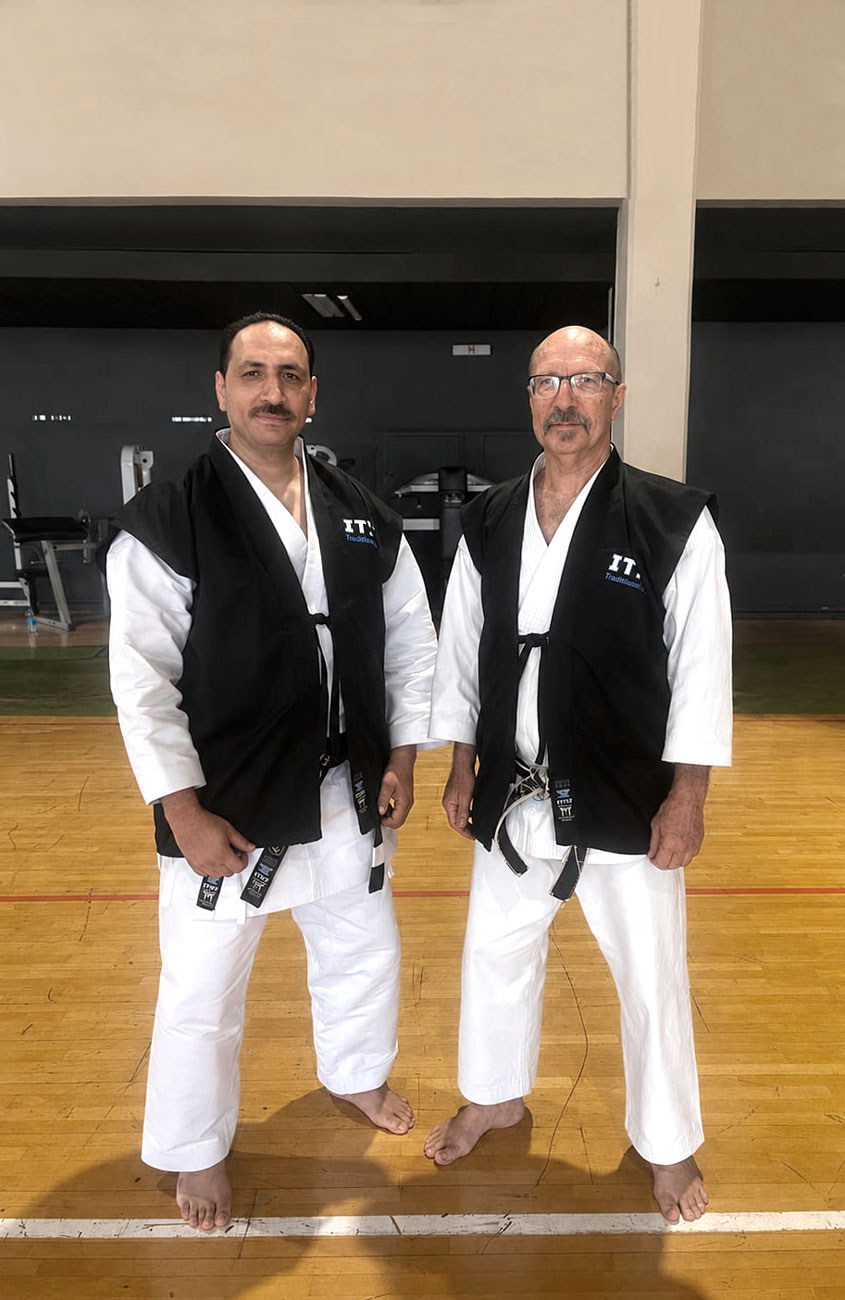
Instructors Mohamed Fawzy and Gilberto Gaertner © ETKF
HOW CAN YOU TURN THE CROWD’S SUPPORT INTO MOTIVATION WITHOUT LOSING EMOTIONAL BALANCE?
Competing at home should be treated as an advantage, not an additional burden. Our message to the athletes is simple: the crowd is there to support them; each athlete’s responsibility on the tatami is to execute what they have trained for.
We will work on routines, communication, mental preparation and competition simulations so that athletes feel comfortable performing under attention and expectation.
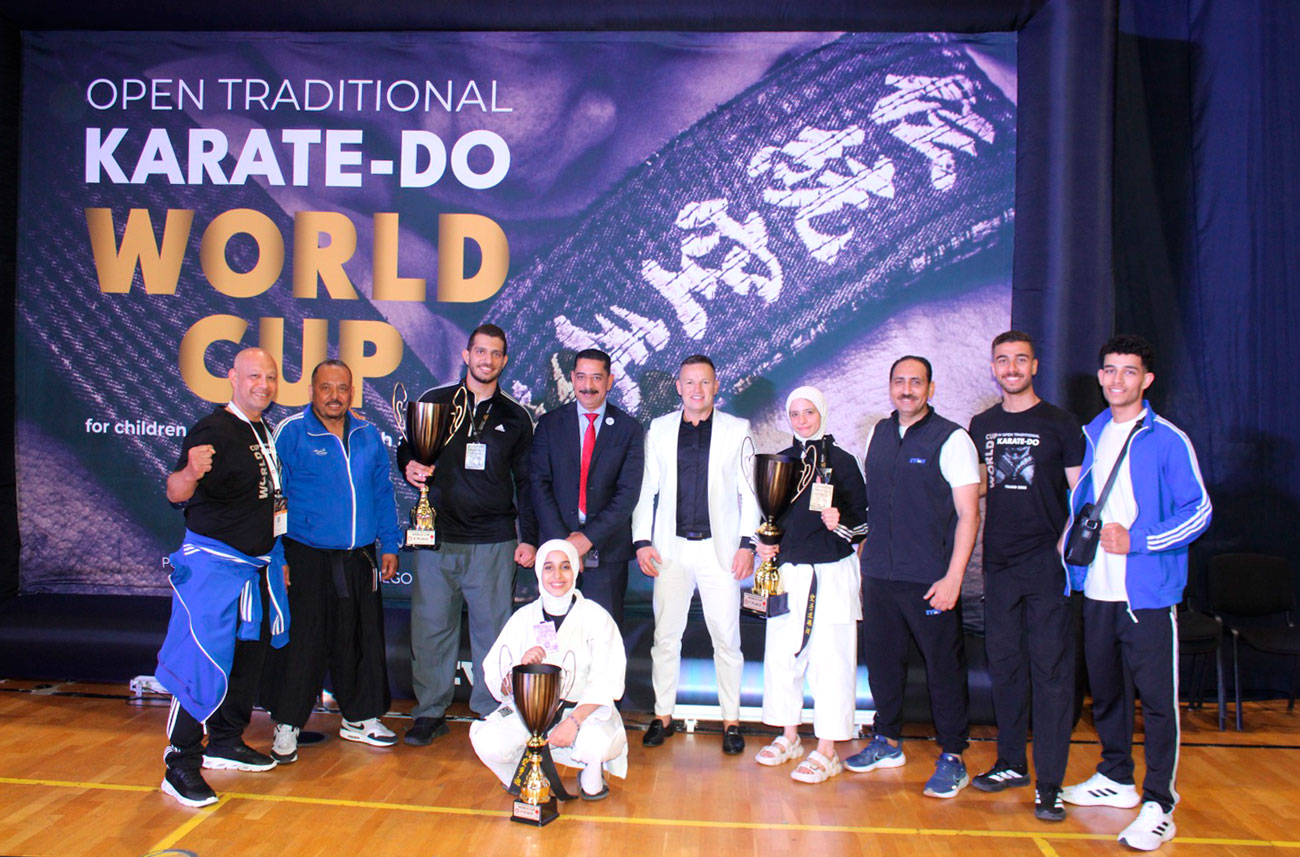
The Egyptian national team at the 2025 Traditional Karate World Cup in Poland © ETKF
We also want to separate the emotional significance of hosting the World Championship from the technical decisions made during competition. The athlete needs to stay focused on the next action, the next exchange of techniques and the next point, rather than on the scale of the occasion.
WHAT COULD A SECOND CONSECUTIVE WORLD TITLE IN CAIRO MEAN FOR THE DEVELOPMENT OF TRADITIONAL KARATE?
A second consecutive world title in Cairo would have enormous significance, but its importance would extend far beyond the medal table. It would demonstrate that the success of 2024 was not an isolated achievement, but part of a sustainable technical programme.
Hosting the World Championship and winning at home could also create important conditions for attracting young athletes, strengthening clubs and academies, encouraging investment in coach education and competition infrastructure, and increasing participation in Traditional Karate.
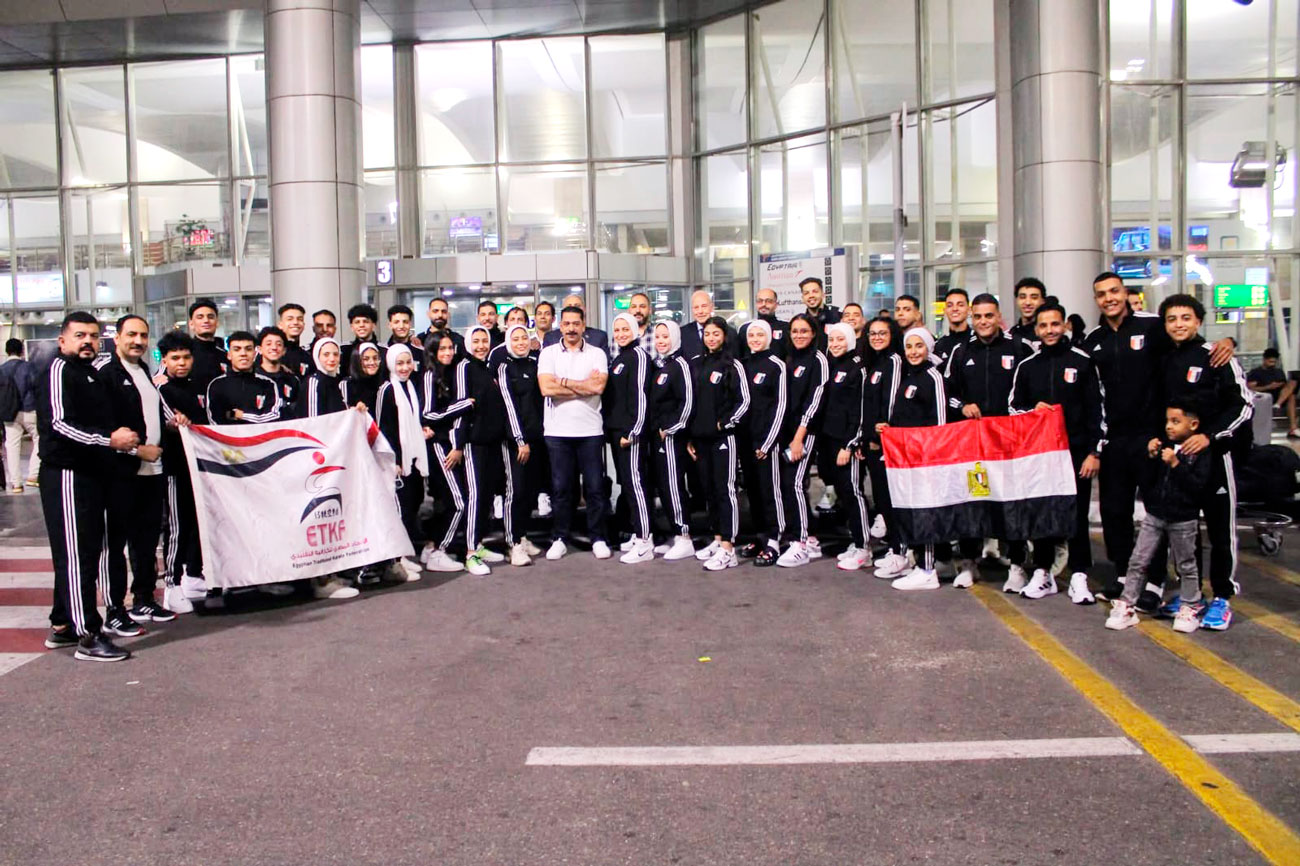
The Egyptian national team at Cairo Airport before departing for Portugal in 2024 © ETKF
Regionally, Egypt has the opportunity to become a reference point for Traditional Karate in Africa and the Middle East, while also helping to strengthen connections between communities in Africa, Europe and Asia.
Our ambition, therefore, is not just to win championships, but to help build the future of Traditional Karate.
WHAT MESSAGE WOULD YOU LIKE TO SEND TO THE NATIONAL TEAMS TRAVELLING TO CAIRO?
To all technical directors, coaches and athletes coming to Cairo: you are not coming just to compete, but to be part of an important chapter in the history of Traditional Karate.
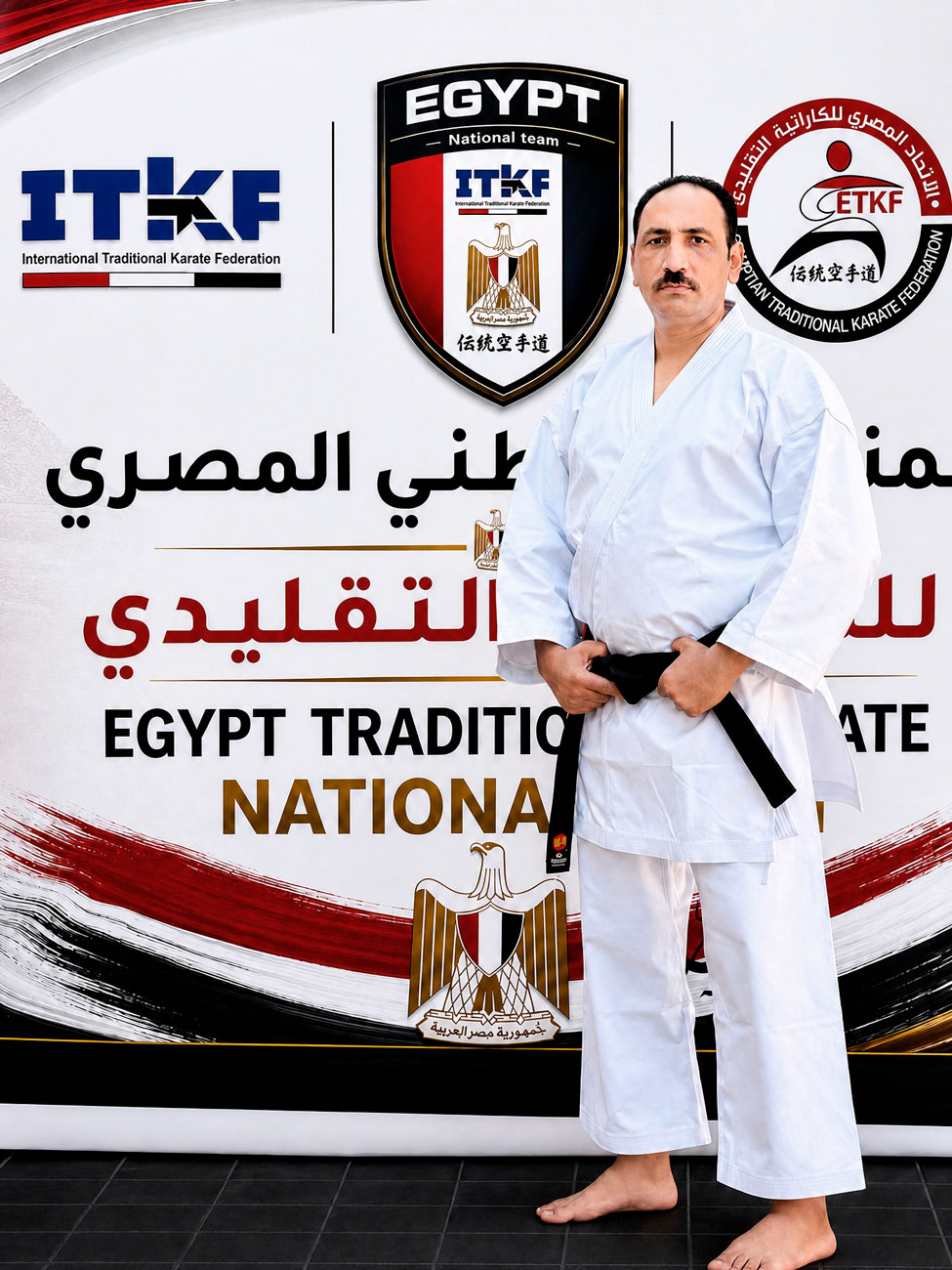
“Our ambition, therefore, is not just to win championships, but to help build the future of Traditional Karate,” says Mohamed Fawzy © ETKF
Egypt welcomes you with respect, sportsmanship and deep appreciation for our international Traditional Karate family. I hope the championship will be marked by a high technical standard, fair competition, mutual respect and unforgettable performances.
We will do everything within our responsibility to ensure that Cairo provides a stage worthy of the world’s best athletes.
May the best performance win, and may the entire Traditional Karate community leave Egypt stronger, more united and more inspired than when it arrived, so that the tradition continues to grow stronger and remains vibrant.