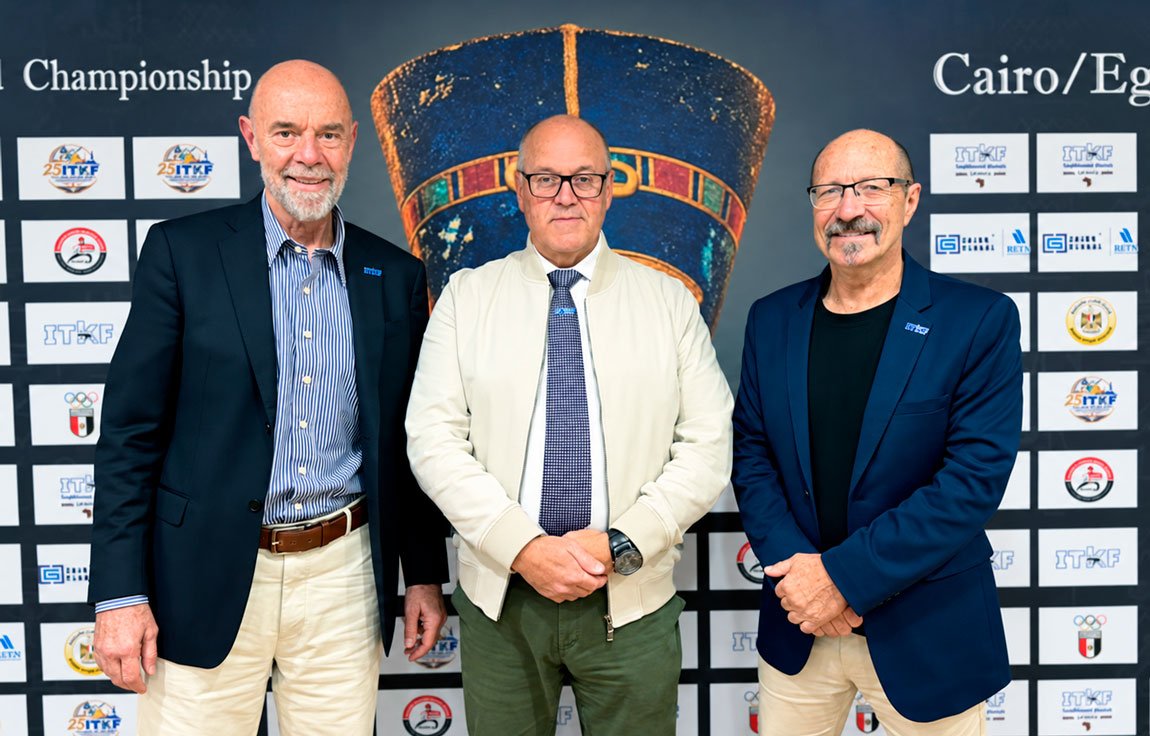
Fernando da Silva was elected chairman, with Luiz Alberto Küster continuing as General Secretary and Gilberto Gaertner serving as Honorary President and chairman of the International Technical Committee.
By Paulo Pinto / Global Sports
Curitiba / Brazil, 28 October 2026
Portugal’s Fernando Manuel Alves Maia da Silva will take over the leadership of the federation on 1 January 2027 for a four-year term. In his first comments to Budô Magazine following his election, he highlighted the contribution of Gilberto Gaertner’s administration to strengthening the institution and its internal democracy, describing that work as the foundation for the next stage.
“I want to continue the work carried out by Sensei Gilberto while also consolidating some areas that still need attention,” he said.
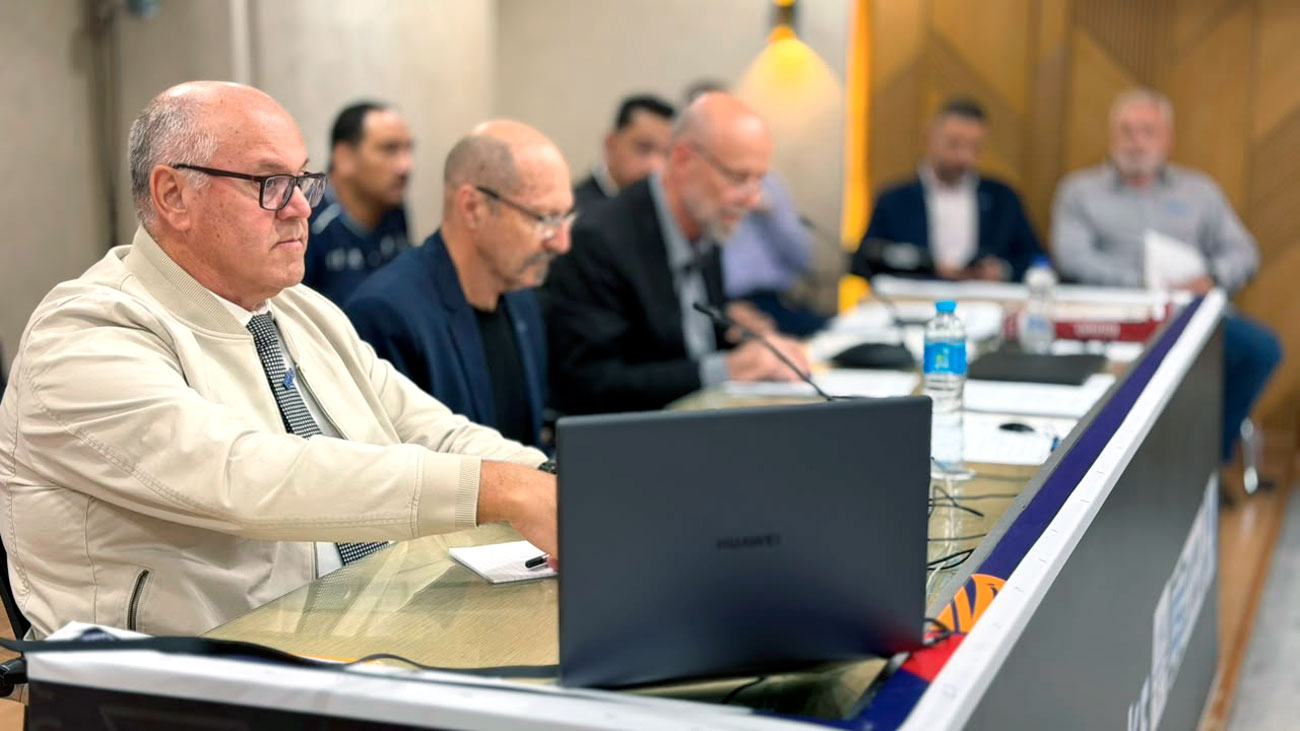
Fernando da Silva, Gilberto Gaertner and Luiz Alberto Küster lead the ITKF Global General Meeting in the conference room at Cairo International Stadium © Leonardo Neves / ITKF
The transition retains the experience of officials who will remain in the administration. Luiz Alberto Küster was reappointed General Secretary, as was Sadiomar Santos as Director General. Gaertner, who served as chairman from 2023 to 2026, will retain his seat on the Board of Directors following his re-election as chairman of the International Technical Committee. His appointment as Honorary President, approved by the General Meeting, gives him a strategic role in representing the organisation.
Trust and responsibility for the new term
Reflecting on his election, Fernando linked the support he received to his dedication to the organisation and his commitment to its international development. “It is recognition of the work I have been doing, my commitment, my dedication and my desire to advance the ITKF in every region,” he said.
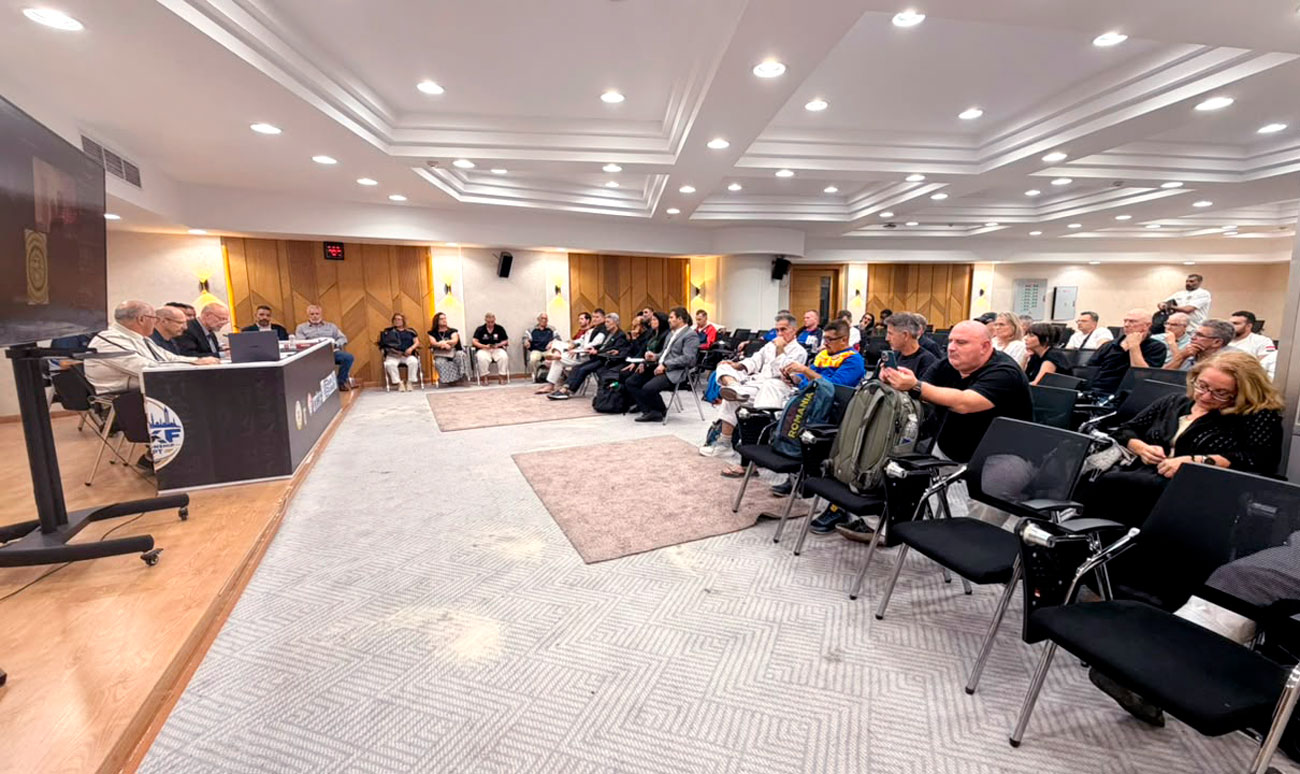
Representatives of national organisations attend the ITKF Global General Meeting in Cairo © Leonardo Neves / ITKF
Among the initiatives he intends to pursue, he mentioned refining the competition regulations, which have evolved over a history dating back to Sensei Hidetaka Nishiyama. In this area, he advocated using technology to support updates and encourage consistent interpretation of the criteria: “We need to use the IT resources available and the latest technology to establish clear rules for everyone.”
Küster and continuity in institutional coordination
Luiz Alberto Küster’s reappointment as General Secretary ensures continuity in his work coordinating the international administration. In a structure bringing together representatives from different continents, he connects the decision-making bodies with the administrative routines that keep the organisation running.
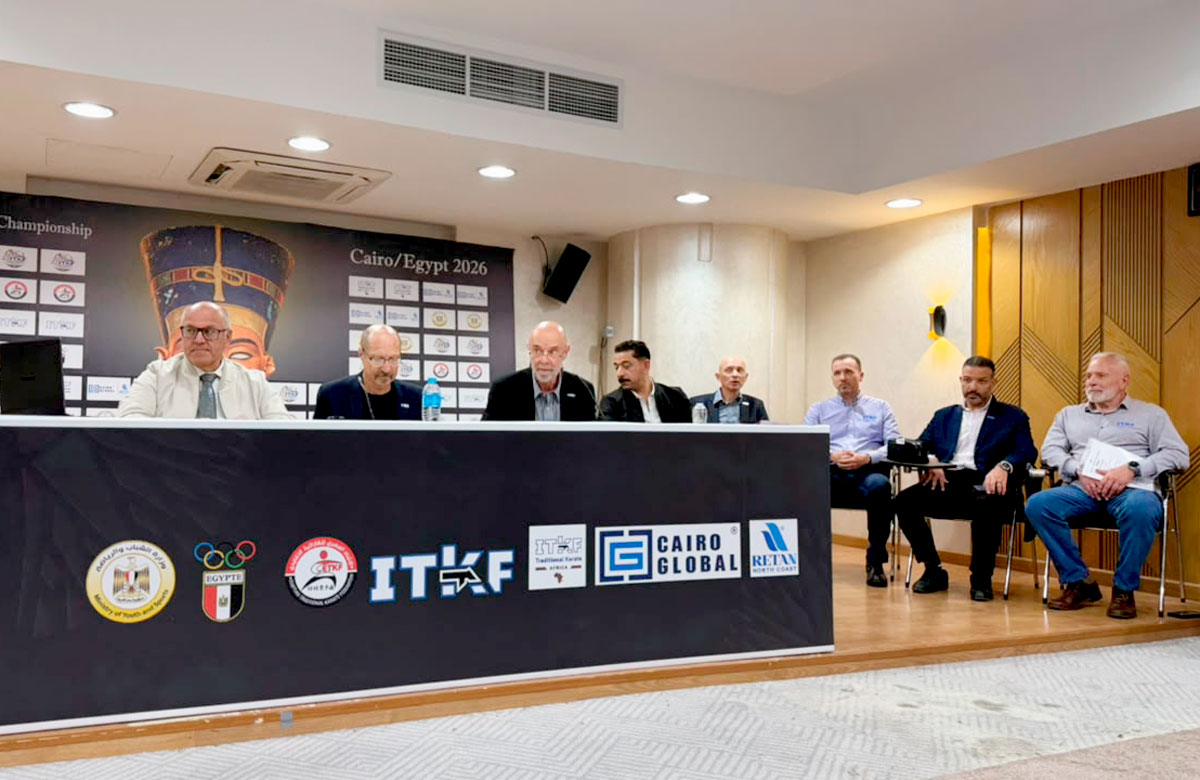
The officials presiding over the 2026 ITKF Global General Meeting © Leonardo Neves / ITKF
Küster outlined the sequence through which the governance structure is formed: the selection of regional representatives, the election of the Technical Committee’s leadership and, through that group, the appointment of the officials responsible for the next term.
“The ITKF’s governance is structured as follows: first, representatives are elected from each of the organisation’s four global regions,” he explained.
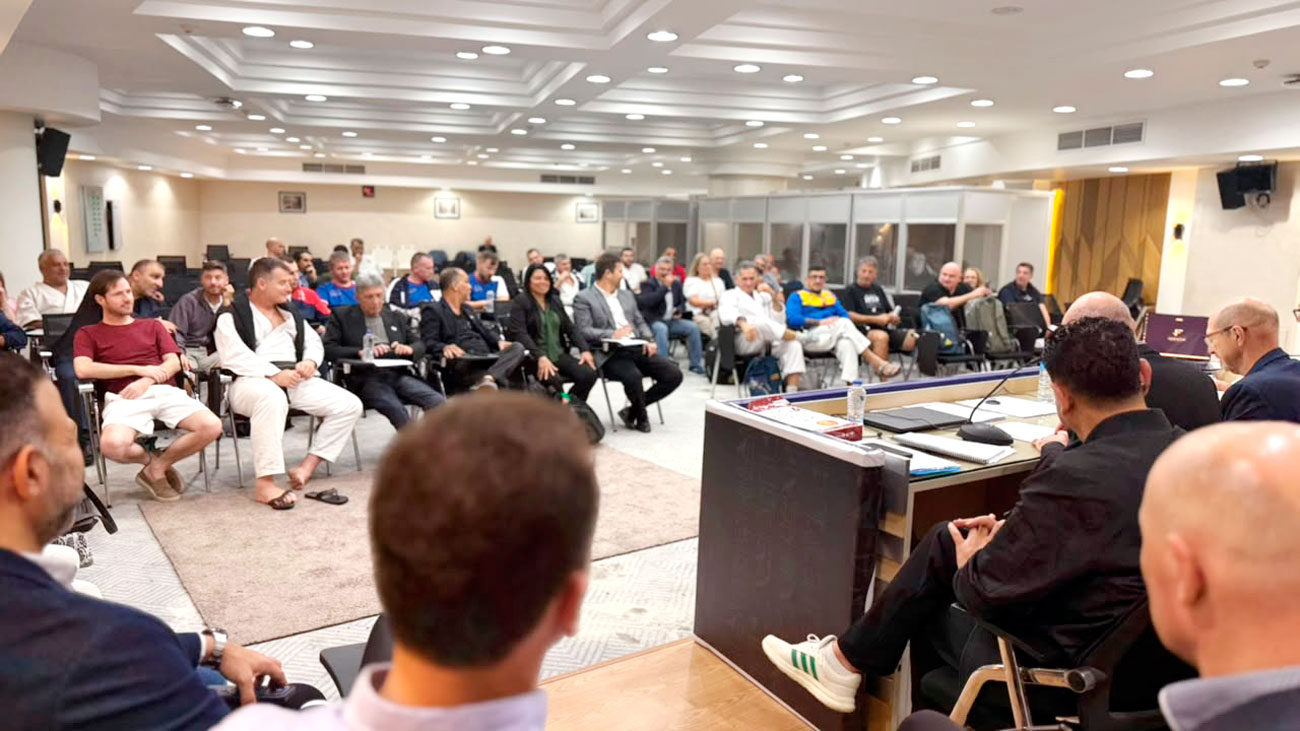
Representatives of national organisations attend the ITKF Global General Meeting in Cairo © Leonardo Neves / ITKF
These representatives come together on the Board of Directors, known in Portuguese as the Conselho de Administração. According to the General Secretary, the board has six members: the representatives of Pan-America, Africa and Asia-Oceania, two representatives from Europe, and the chairman of the International Technical Committee. Europe holds two seats, he explained, because the region has more than ten member countries.
In explaining this structure, Küster also highlighted a distinction important to an international understanding of the roles. In this context, “director” means a member of the Board of Directors, while executive responsibilities are assigned to other positions within the organisation. This distinction prevents confusion between board membership and the roles of those responsible for administrative operations.
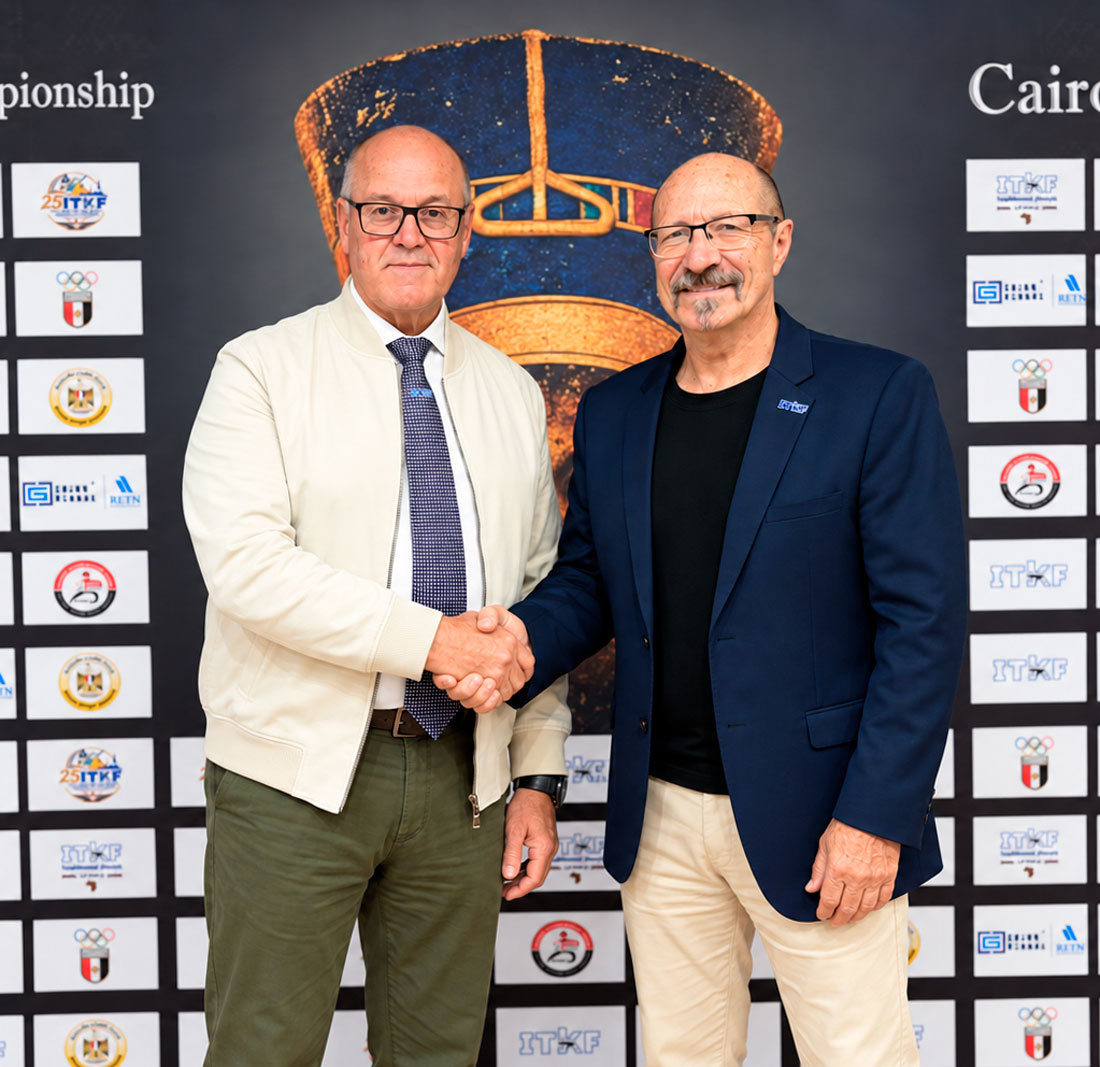
Gilberto Gaertner congratulates Fernando da Silva on his election to lead ITKF Global © Leonardo Neves / ITKF
The General Secretary’s work spans precisely this relationship between representation, deliberation and institutional operations. Continuity in that role, alongside the Director General and the other support functions, provides a foundation for a leadership transition that preserves the federation’s day-to-day work.
International representation in the new term
According to the composition announced following the deliberations, the Board of Directors will comprise Roman Pavlovic of Slovenia and Anna Kulczynska of Poland, representing Europe; Vinicius Santana of Brazil, representing Pan-America; Ramy El Mekawy of Egypt, representing Africa; Ibrahim Al Bakr of Saudi Arabia, representing Asia-Oceania; and Gilberto Gaertner of Brazil, representing the International Technical Committee.
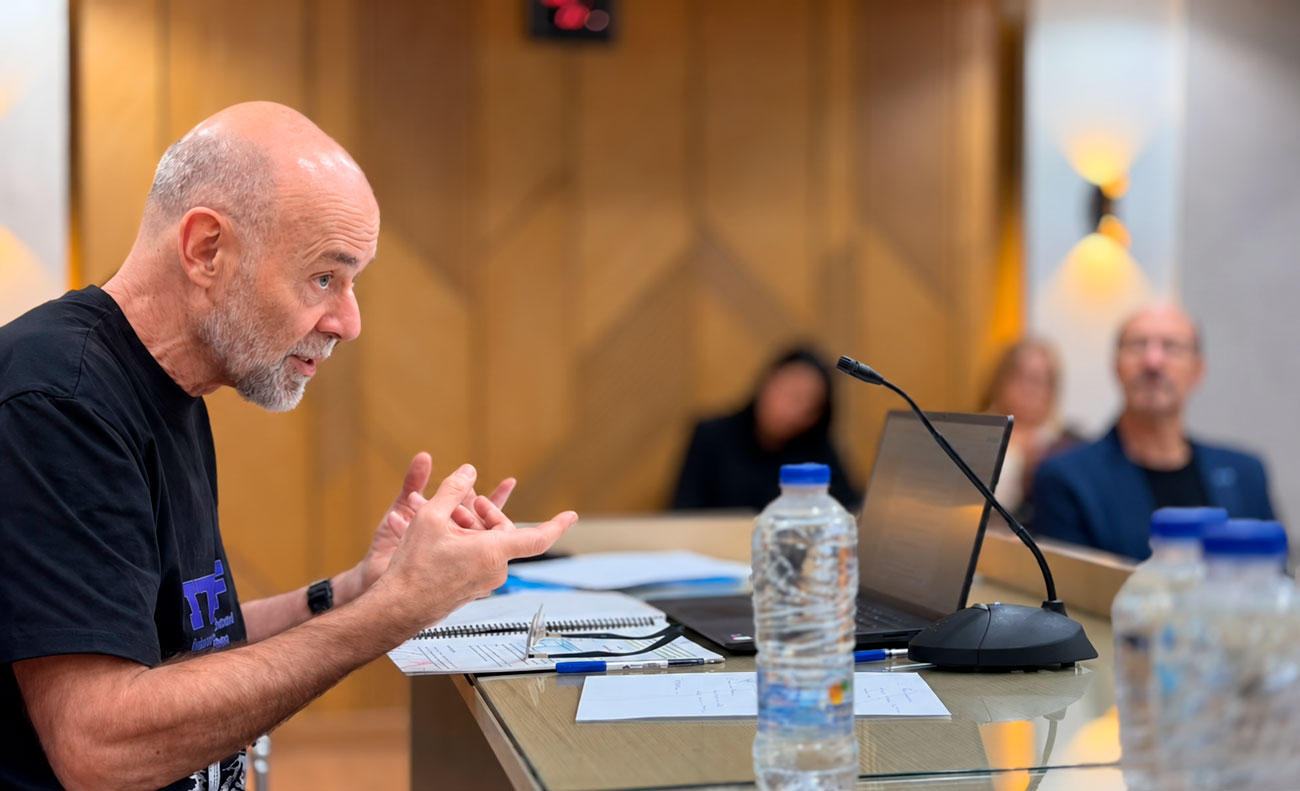
Luiz Alberto Küster leads the ITKF Global Board of Directors meeting in Cairo © Leonardo Neves / ITKF
The administration will include Sandrine El Marhomy as Vice-President, Luiz Alberto Küster as General Secretary, Natalie Silva as Treasurer and Sadiomar Santos as Director General. The interviews also confirm that Juarez Franco will continue as an adviser on information technology.
The distinction between these roles is particularly relevant to this transition. Fernando Maia da Silva will take up the position of chairman, while Gilberto Gaertner’s presidency will be honorary, with responsibility for representing the organisation. Gaertner’s seat on the Board of Directors derives from his position as chairman of the International Technical Committee.
The legal and statutory headquarters will remain in Curitiba, Paraná, Brazil. In Portugal, the permanent representation will adopt the name ITKF International Administrative Office, supporting the organisation’s international management.
Gilberto Gaertner sees “continuity with renewed energy”
Assessing the election, Gaertner highlighted the democratic conduct of the process and the prospect of keeping the administrative structure running throughout the change in leadership. His assessment combines confidence in the chairman-elect with the opportunity to devote more attention to technical work.
“I was extremely pleased because the process was democratic and transparent in every area,” he said.
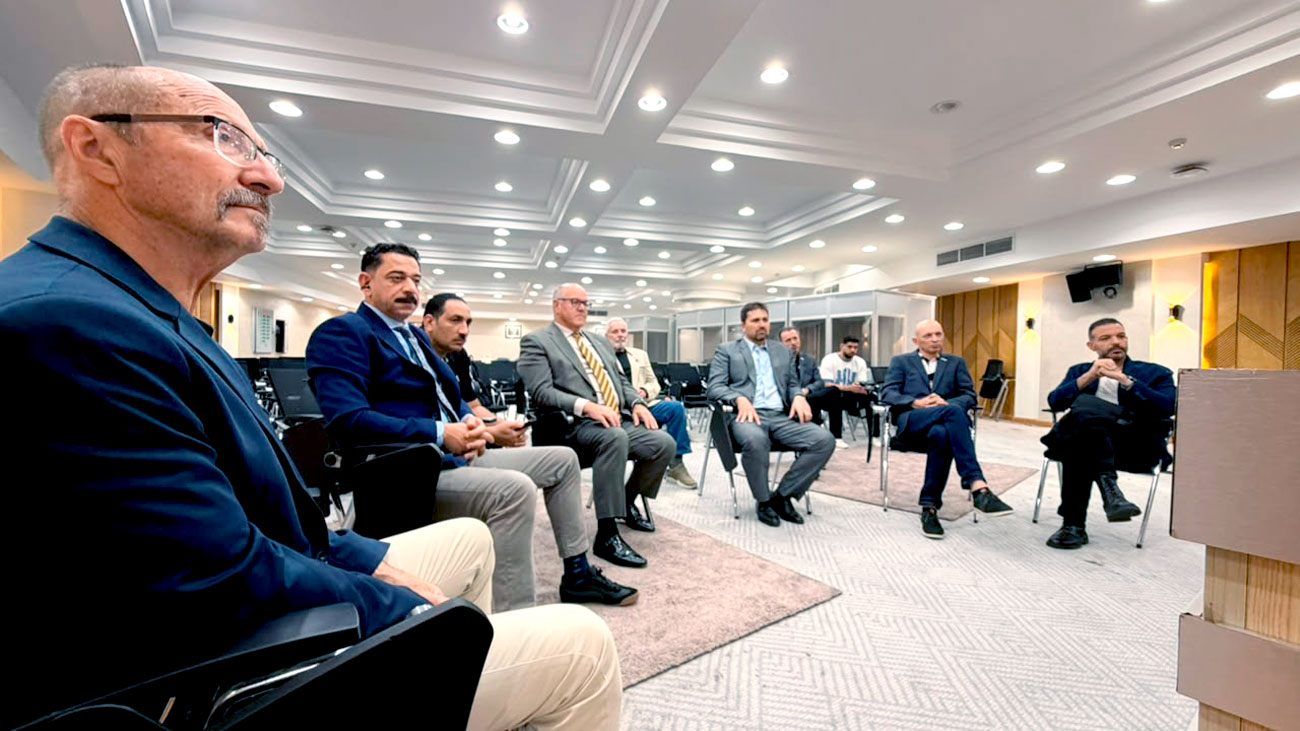
An overview of the ITKF Global Board of Directors meeting in Cairo © Leonardo Neves / ITKF
Speaking about Fernando Maia da Silva, Gaertner highlighted personal and professional qualities he considers important to the role. “He is a level-headed person with extensive business experience, very honest, and someone who will certainly be dedicated and capable. I believe he can do a great deal to advance the ITKF’s development.”
His re-election as chairman of the International Technical Committee allows the Brazilian to concentrate his efforts on an area to which he wishes to devote more time. The end of his term as federation chairman, he explained, makes room for this redistribution of responsibilities.
“This now allows me to return my focus to the technical side, which is where I would like to work at this stage. With more opportunity to devote myself to it, I believe I can concentrate my efforts and achieve much more in this area.”
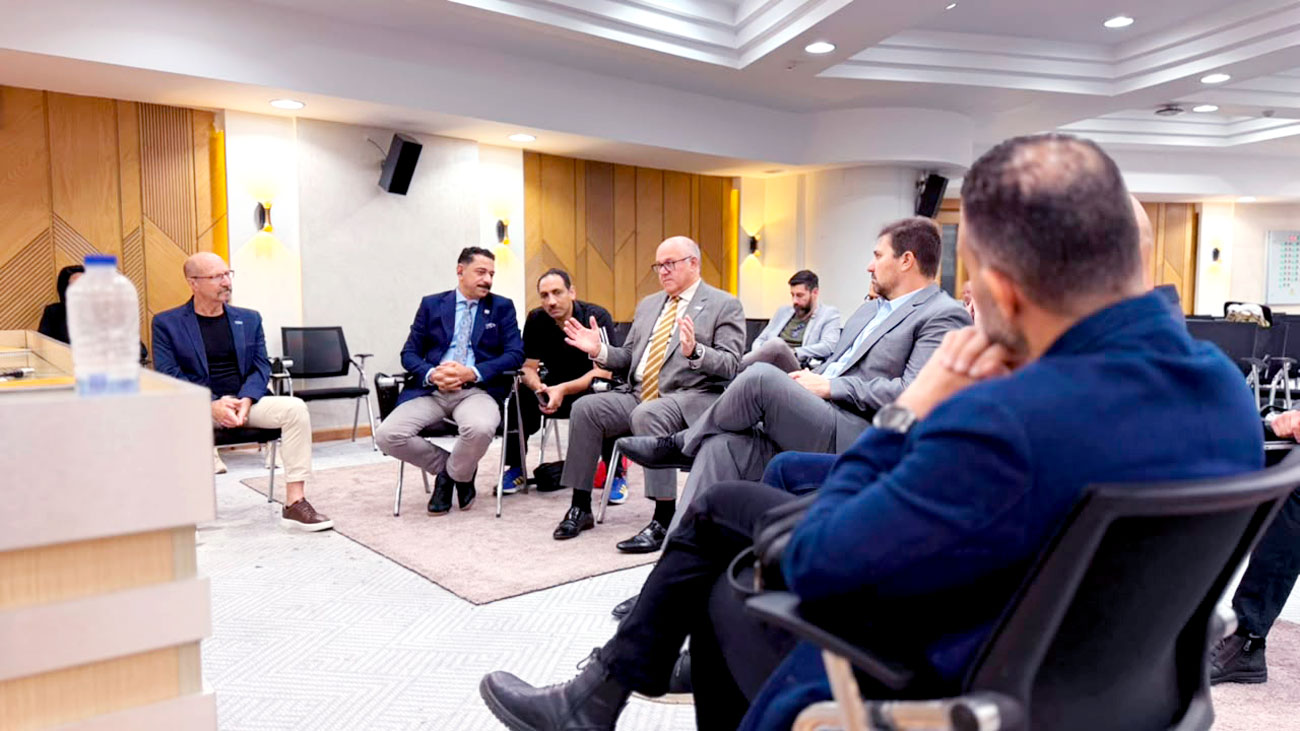
Fernando da Silva addresses the ITKF Global Board of Directors meeting in Cairo © Leonardo Neves / ITKF
On the administrative side, Gaertner linked the continued service of Küster, Sadiomar and Juarez to maintaining the services that underpin the organisation’s daily work, including issuing certificates, maintaining the website and other operational activities.
“This is positive because it avoids disruption. We have continuity, but also renewal: continuity with renewed energy,” he said.
Recognition for three careers dedicated to traditional karate
The meetings held in Cairo also included recognition of kyū dan, or 9th dan, for Gilberto Gaertner, Eligio Contarelli and Ugo Arrigoni Neto.
According to the institutional summary, the nominations were approved by the International Technical Committee at its meeting on 25 October, in recognition of the three instructors’ careers in the practice, teaching, research and development of traditional karate.
The recommendations were forwarded to the Directors Meeting, the body responsible for final ratification of the grades, and received the institutional endorsement of the General Meeting.
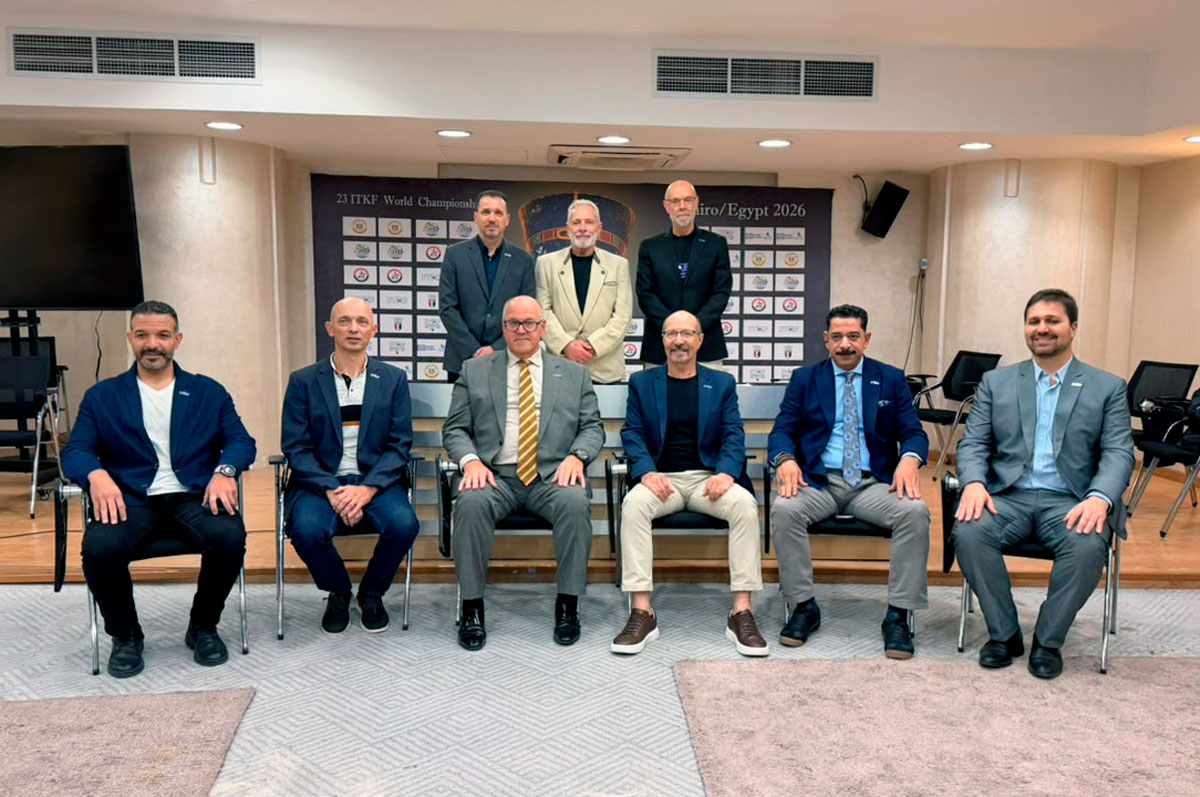
Members of the ITKF Global Board of Directors gathered in Cairo © Leonardo Neves / ITKF
The distinction brings together two aspects of continuity for the discipline within the same gathering: organising its next administration and recognising instructors whose work has helped train practitioners and pass on knowledge across generations.
Lithuania and Russia become Full Members
Expansion of the membership was another outcome of the deliberations. Following the submission and review of their institutional documentation, the organisations from Lithuania and Russia were approved as Full Members of the federation.
The Lithuanian organisation is led by Sensei Vadim Akimov. The Russian organisation is represented by Sensei Gevorg Sargsyan.
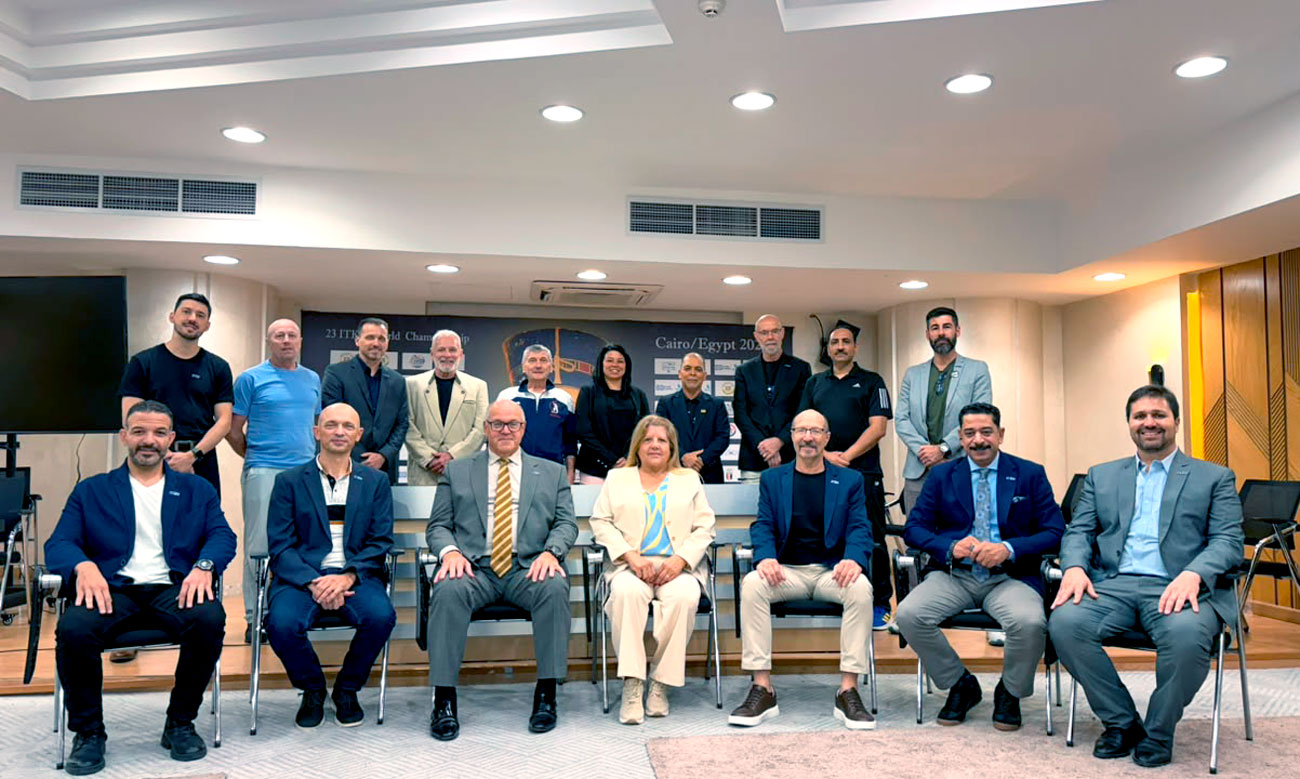
Members of the ITKF Global Board of Directors and officials from different countries gathered after the deliberations © Leonardo Neves / ITKF
The decision broadens the participation of national organisations in the international structure and adds a further dimension of integration to the work of the next administration.
New leadership and shared responsibilities
Fernando Maia da Silva’s term will officially begin in January, but his first comments as chairman-elect already set out the direction he intends to take: acknowledging the work he inherits, consolidating the institutional structure and addressing regulatory matters with the support of technology.
Luiz Alberto Küster’s continued service as General Secretary, continuity in the Director General’s role and Gilberto Gaertner’s leadership of the Technical Committee form the basis of this transition. The distribution of responsibilities brings together administrative experience, international representation and technical expertise for the next stage.
For the traditional karate community, the significance of the decisions taken in Cairo will also be reflected in daily practice: in clear guidance, dialogue between regions, the quality of services, and the conditions that enable instructors and practitioners to carry out their work.
These commitments will provide the measure of the new administration’s work. Preserving Hidetaka Nishiyama’s legacy requires knowledge and continuity; passing it on to future generations also requires organisation, dialogue and the ability to adapt. The elected leadership will be responsible for bringing these tasks together in a shared endeavour.