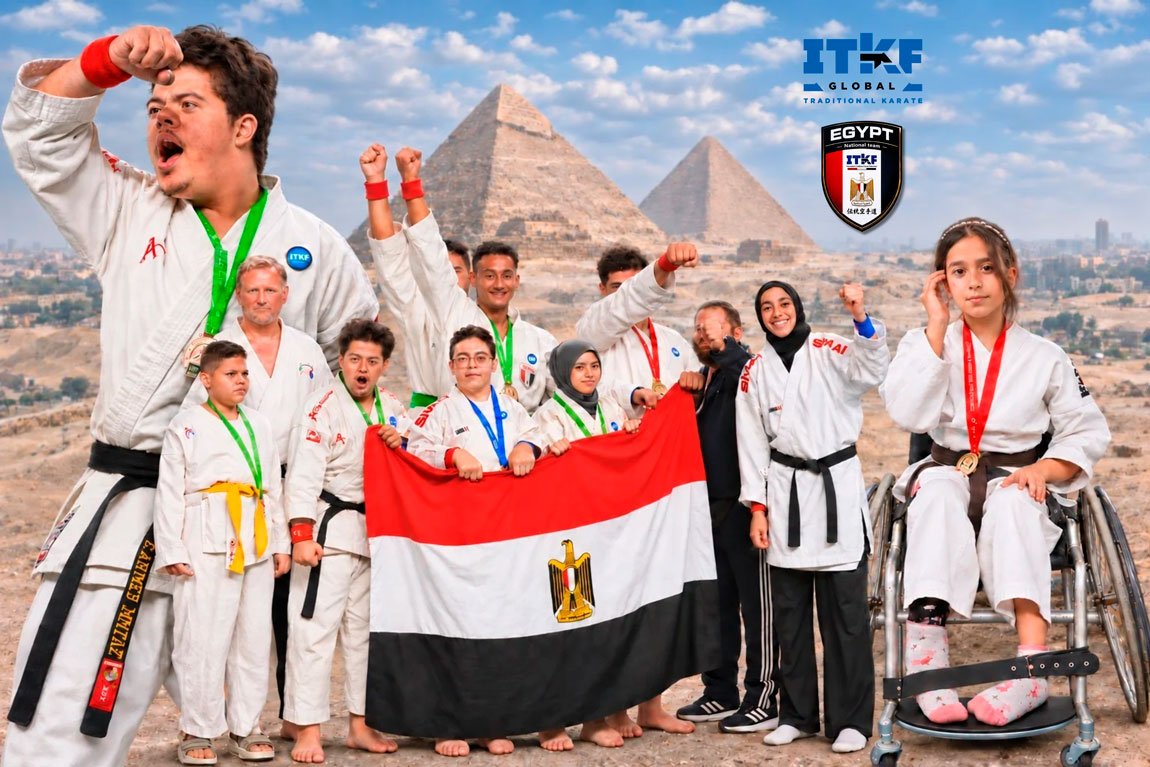
A change to the ITKF statutes opened the way for athletes with disabilities to take part. In Egypt, the initiative made its way into competition and gave fresh momentum to coach training in national federations.
By Paulo Pinto / Global Sports
Curitiba / Brazil, 20 November 2026
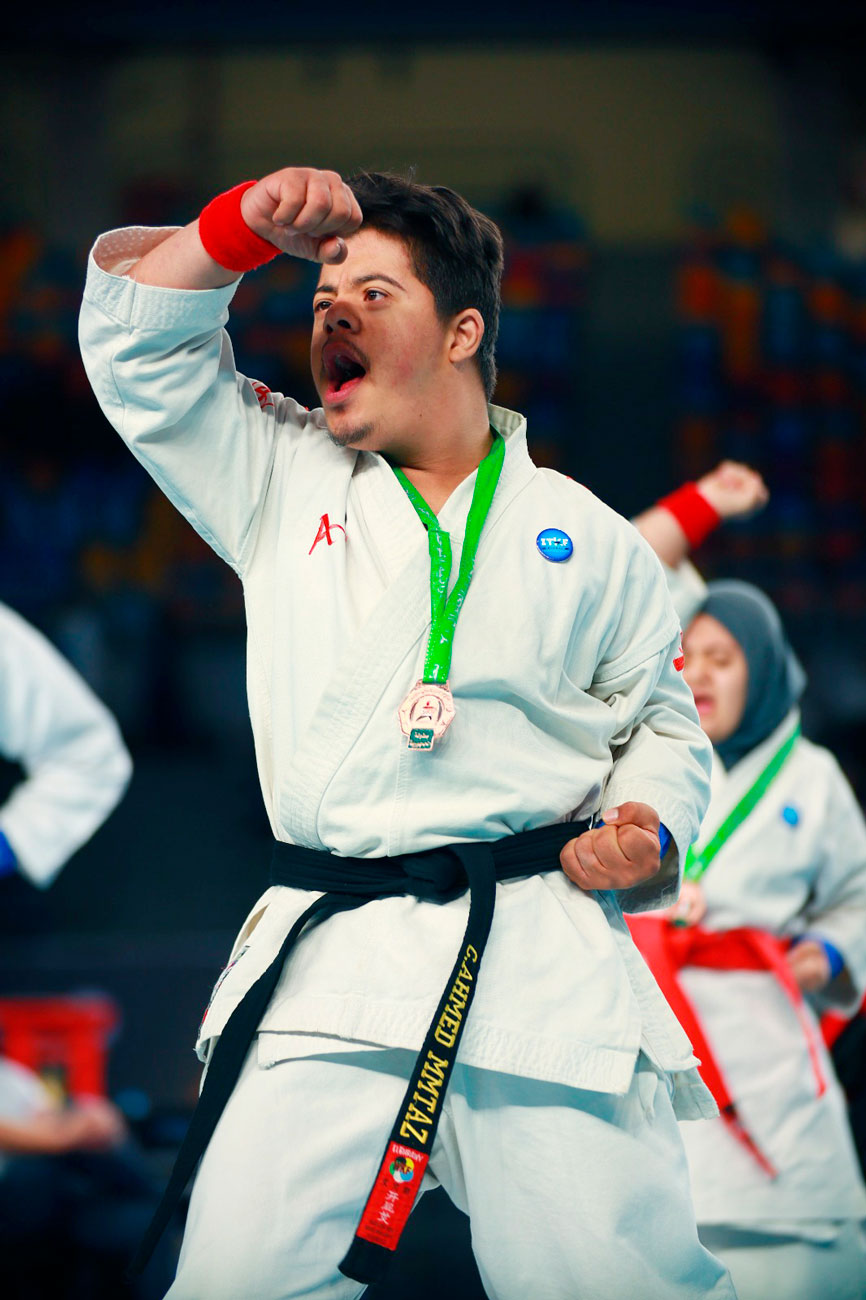
Six karate athletes presented the work being done in i-Karate (Inclusive Karate) to the delegations gathered for the opening ceremony of the 23rd ITKF World Championship in Cairo. The demonstration drew attention to an initiative that received 90 entries, brought together coaches, family members and referees, and put into practice a teaching method adapted to people with different types of disabilities.
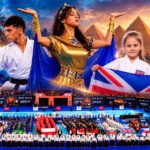
i-Karate brought new meaning and a new dimension to the 23rd ITKF Traditional Karate World Championship in Cairo © ITKF / Photomontage by Global Sports
For Slovenia’s Roman Pavlovic, chairman of ITKF Europe and one of the officials who helped advance the initiative within the international federation, the six athletes showed the delegations what could be achieved through regular training in dojos. “I hope they saw what is possible when people with disabilities receive structured training that is carefully adapted to their needs,” he says.
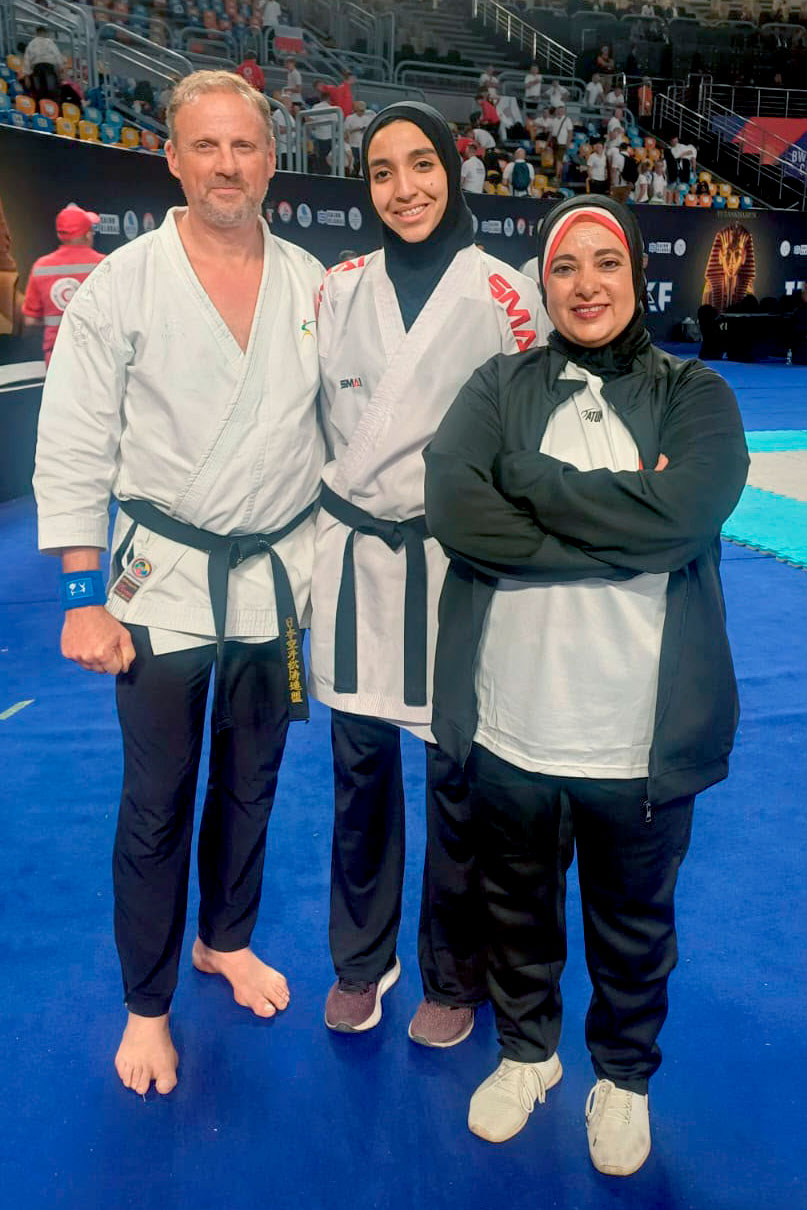
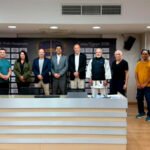
Eric Bortels, Sara Mohamed Hassan and Dr Amal Farouq played key roles in the i-Karate activities at the 23rd ITKF World Championship © ETKF
From the statutes to the dojo
The initiative began to take shape several years before the World Championship, when the ITKF amended its statutes. Until then, the document had defined a competitor as a person in good health. Removing that requirement opened the way for people with disabilities to be formally recognised as participants in the federation’s activities.
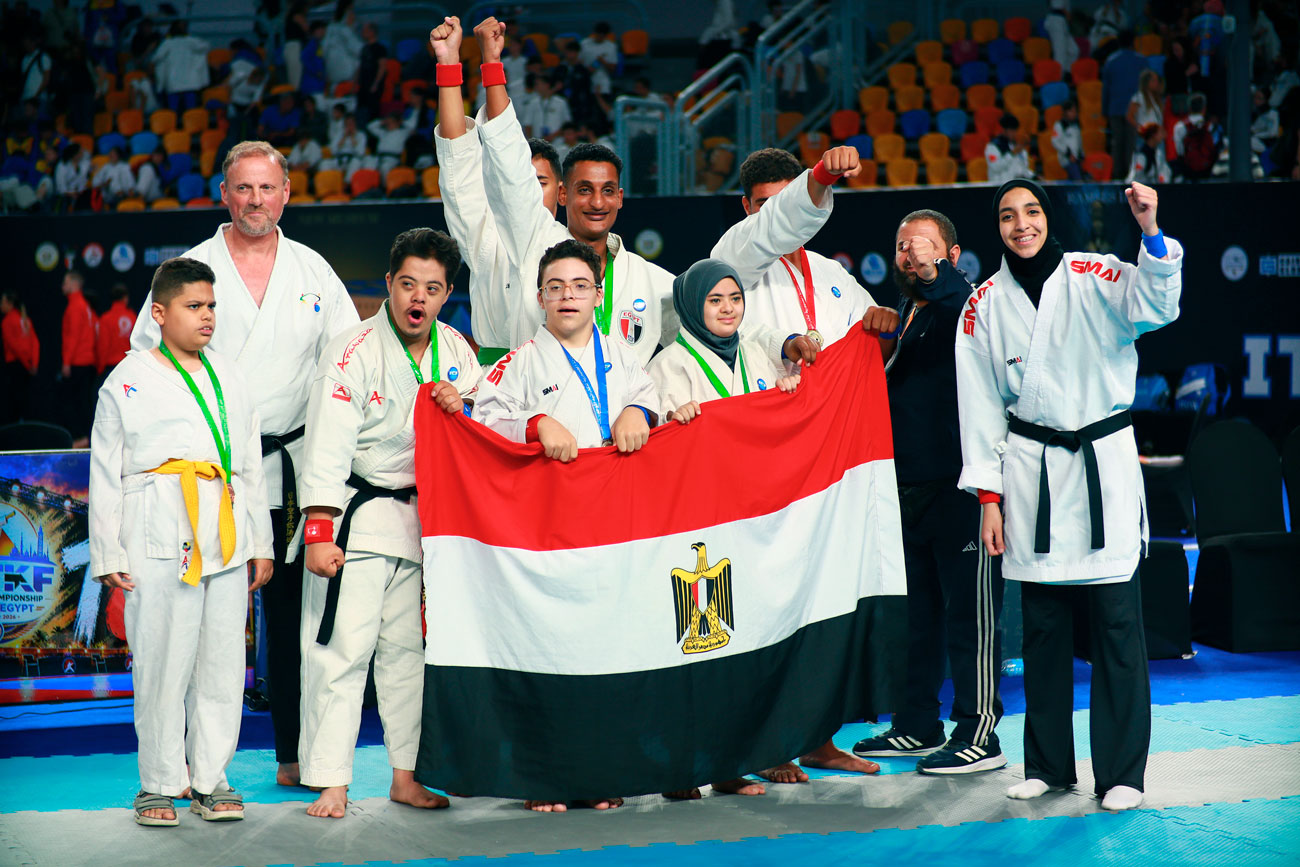
Eric Bortels, Sara Mohamed Hassan and Egyptian athletes celebrate the official inclusion of i-Karate in the ITKF Traditional Karate World Championship © ETKF
The next step was to find a teaching method that would help instructors work with students with physical and intellectual disabilities. The ITKF found that expertise in the Inclusive Karate Federation (IKF), founded by instructor Eric Bortels. The two organisations signed a memorandum of understanding, and the ITKF established its i-Karate Commission. Pavlovic took on responsibility for developing the initiative within the federation, with Bortels as its principal technical adviser.
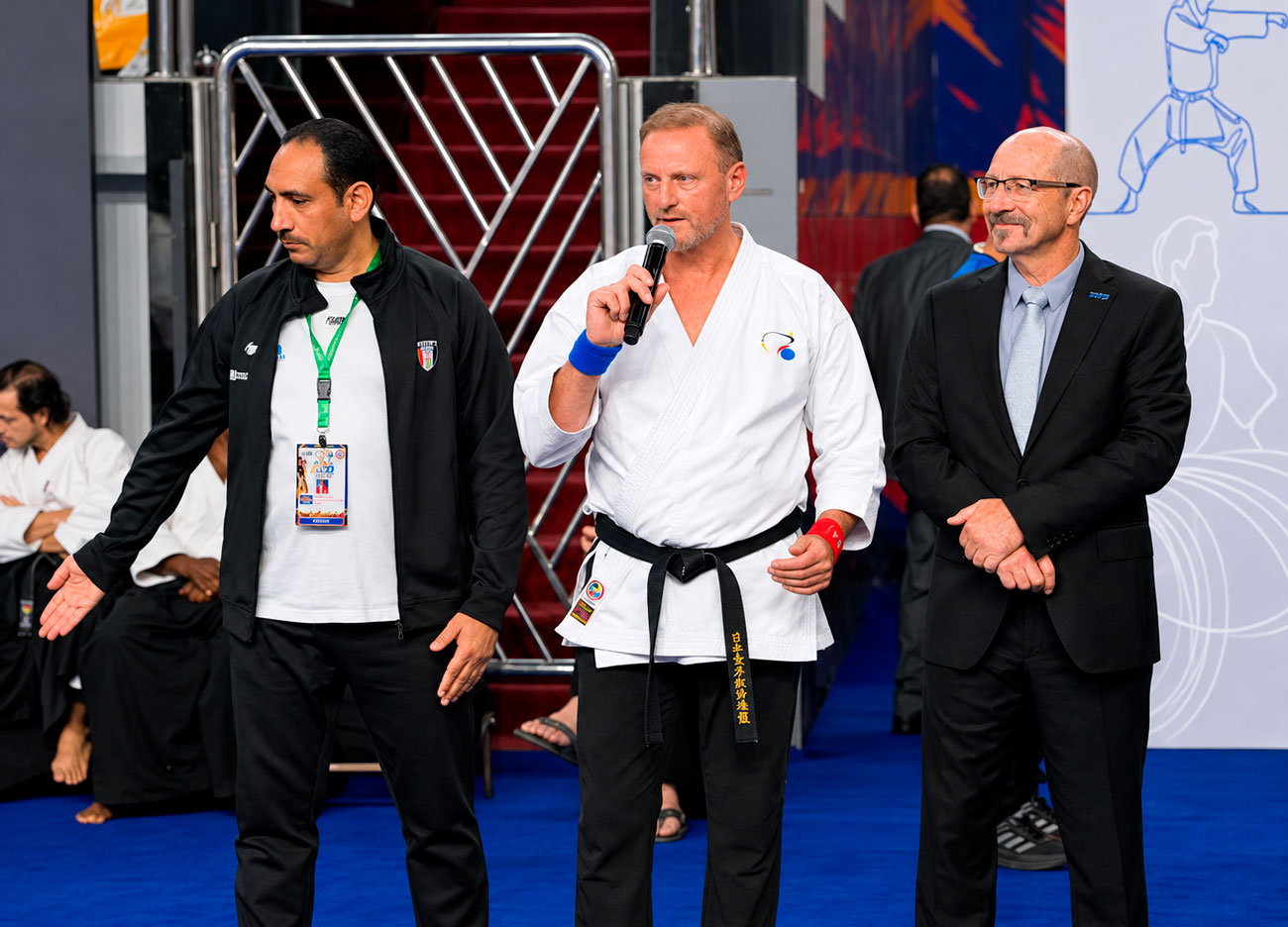
Eric Bortels highlights the importance of i-Karate at the World Championship opening ceremony with Mohamed Fawzy Ali and Gilberto Gaertner © ETKF
“What impressed me was the work that went into adapting training to different types of disabilities and to each person’s specific needs,” Pavlovic explains. “You need to understand what each student can do, recognise the limitations they may encounter and find the right approach to help them develop their skills.”
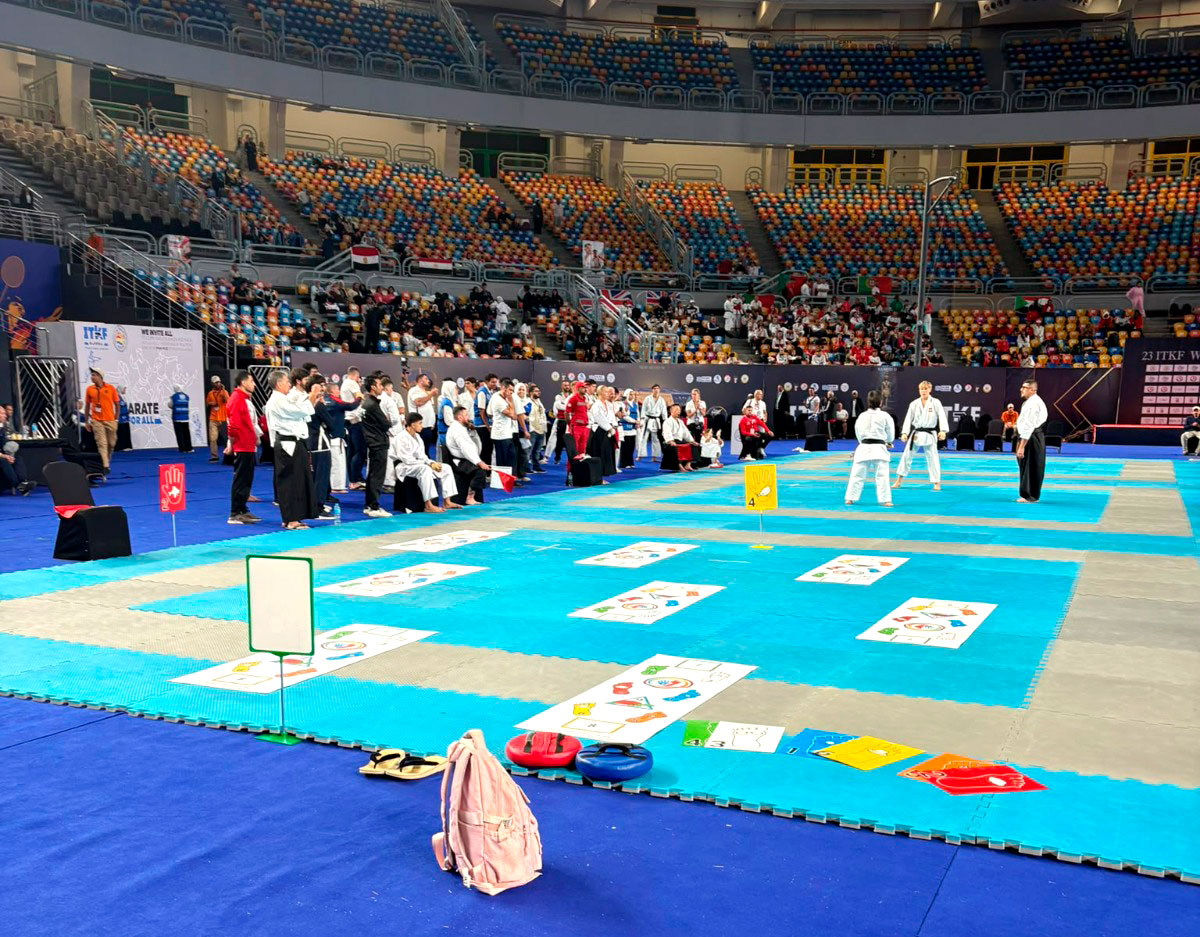
The ITKF now has a training methodology adapted to different types of disabilities and each participant’s specific needs © ETKF
Competition in Cairo
The World Championship gave the ITKF an opportunity to apply the method in international competition. The Egyptian organisers helped bring athletes and coaches together and prepare for the events. Pavlovic highlights the work of Dr Amal Farouq of the Cairo Faculty of Sports Sciences, Sara Mohamed Hassan and the other members of the local team.
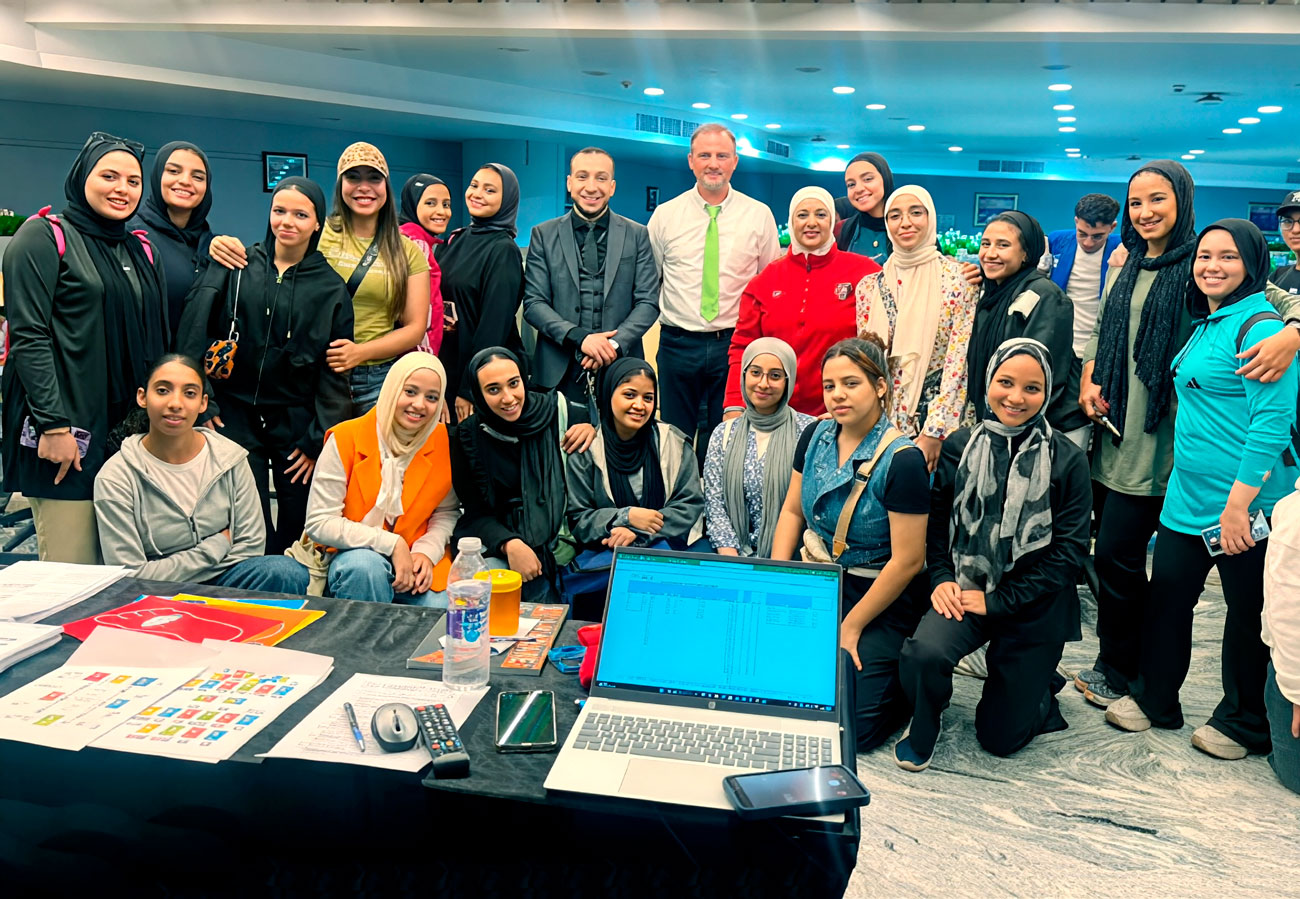
Instructors interested in working in i-Karate attend a presentation of the methodology in Cairo © ETKF
The ITKF still had limited information on the ages, types of disabilities and sporting backgrounds of prospective competitors. The organisers made kata the main event on the programme and entrusted Eric Bortels with classifying the 90 entrants. According to Pavlovic, the process resulted in 14 kata categories and two kihon categories.
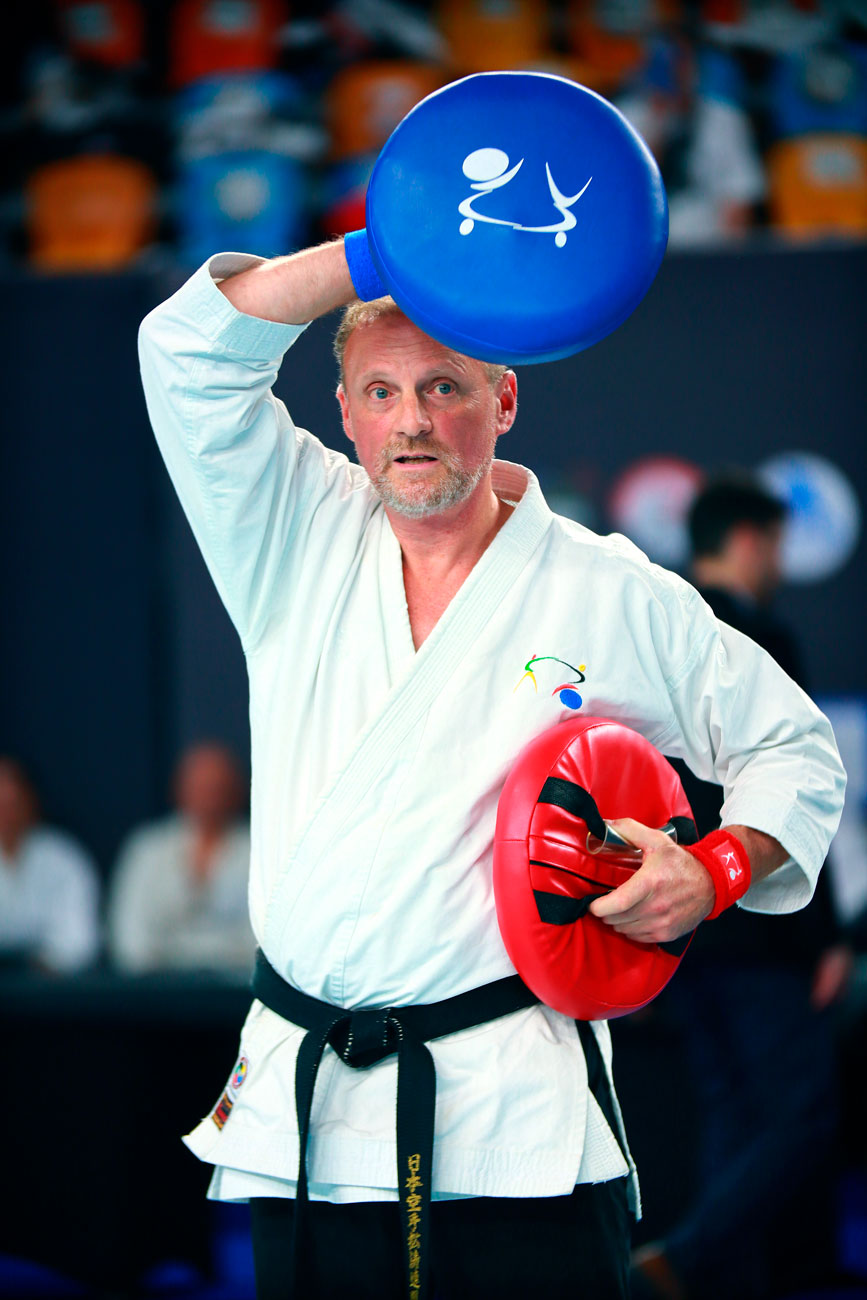
Eric Bortels uses colours to guide i-Karate athletes during the opening ceremony demonstration © ETKF
Classification required close contact with the athletes and those who support them in training. “At times, the challenges went beyond the language barrier. Understanding each athlete’s specific needs took patience, dialogue and cooperation with coaches, parents and support persons. Their contribution was invaluable,” Pavlovic recalls.
The role of referees
Referee preparation covered the categories, the technical aspects to look for in each performance and the criteria for assessing athletes with different abilities. Pavlovic says the experience also helped referees see how their work can encourage athletes to stay involved in the sport.
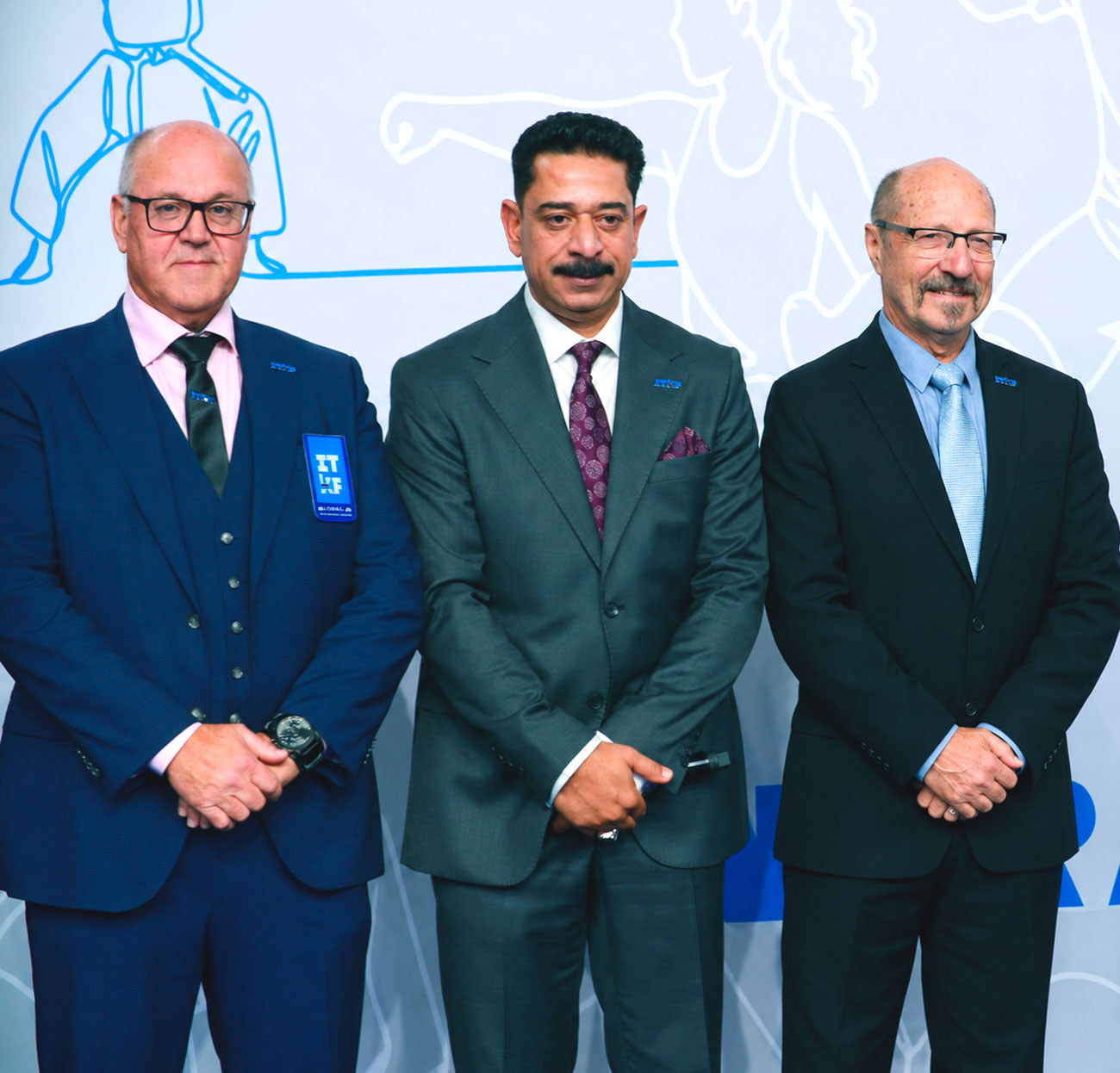
Eric Bortels highlighted the support of Fernando da Silva, a member of the ITKF Global Board of Directors, Ramy El-Mekawy, president of the Egyptian Federation, and Gilberto Gaertner, chairman of ITKF Global, for including i-Karate in the World Championship © ETKF
“There were results and rankings. In this first experience, taking part was at least as important as the final placing,” he says. “I believe the referees understood that balance. For many of them, the experience broadened their knowledge and deepened their understanding of the role they play in developing traditional karate. We all learned, and those lessons will help us improve future competitions.”
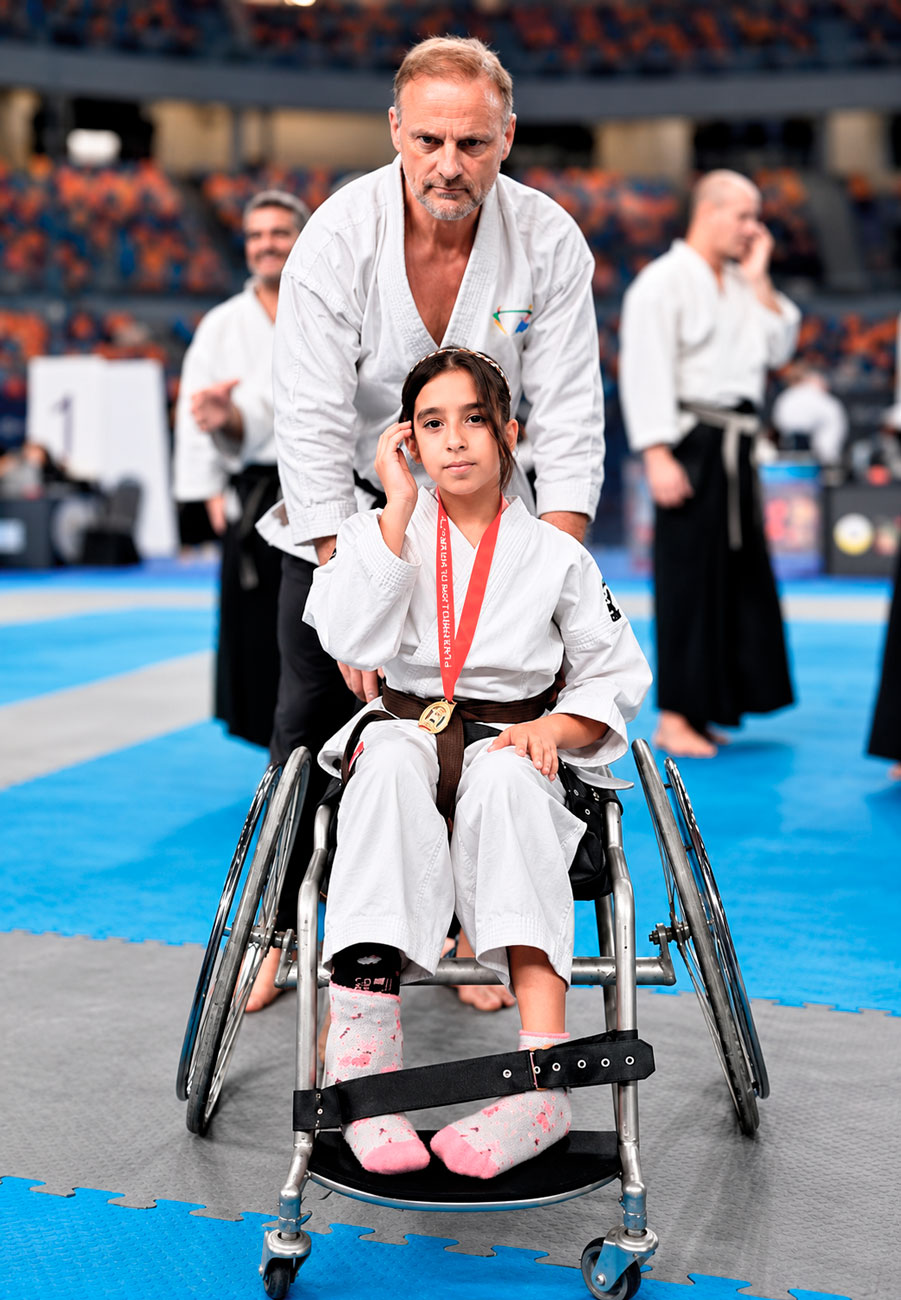
Eric Bortels guides a young athlete across the tatami © ETKF
Eric Bortels thanks those who made it possible
After the championship, Eric Bortels shared an account of the work in Cairo in the ITKF WhatsApp group. He noted that 60 people took part in a training session and thanked the officials, the Egyptian team and the referees for their support. He wrote:
“I would like to share the incredible experience I had working with everyone at the ITKF World Championship in Cairo, where I was responsible for i-Karate.
“It was an intense few days, with a lot of hard work and a truly fantastic atmosphere. In all, 90 karate athletes registered. After the classification process I conducted, they were placed in 14 categories. We then held a short training session for 60 people who were interested, and there was a demonstration after the ceremony.
“Thank you to the entire ITKF team for the warm welcome, and especially to Roman Pavlovic, who believed in my methodology and worked actively to promote and support it.
“My special thanks go to Sensei Ramy El-Mekawy, president of the Egyptian Federation, and Sensei Mohamed Fawzy, a member of the ITKF Technical Committee. I also thank Dr Amal Farouq of the Cairo Faculty of Sports Sciences, Sara Mohamed Hassan for all her excellent translation work, and all the referees for the empathy they showed.
“I would also like to thank Professor Gilberto Gaertner, PhD, chairman of ITKF Global, Fernando da Silva, who was recently elected to lead the federation for the next four years, and Secretary General Luiz Küster.
“This championship opened people’s eyes to i-Karate, both through the competition and through the inspiring opening ceremony performance by six courageous athletes.
“We are continuing this partnership with the ITKF, with our main focus now on the Train the Trainer programme.
“Oss,
Eric Bortels”
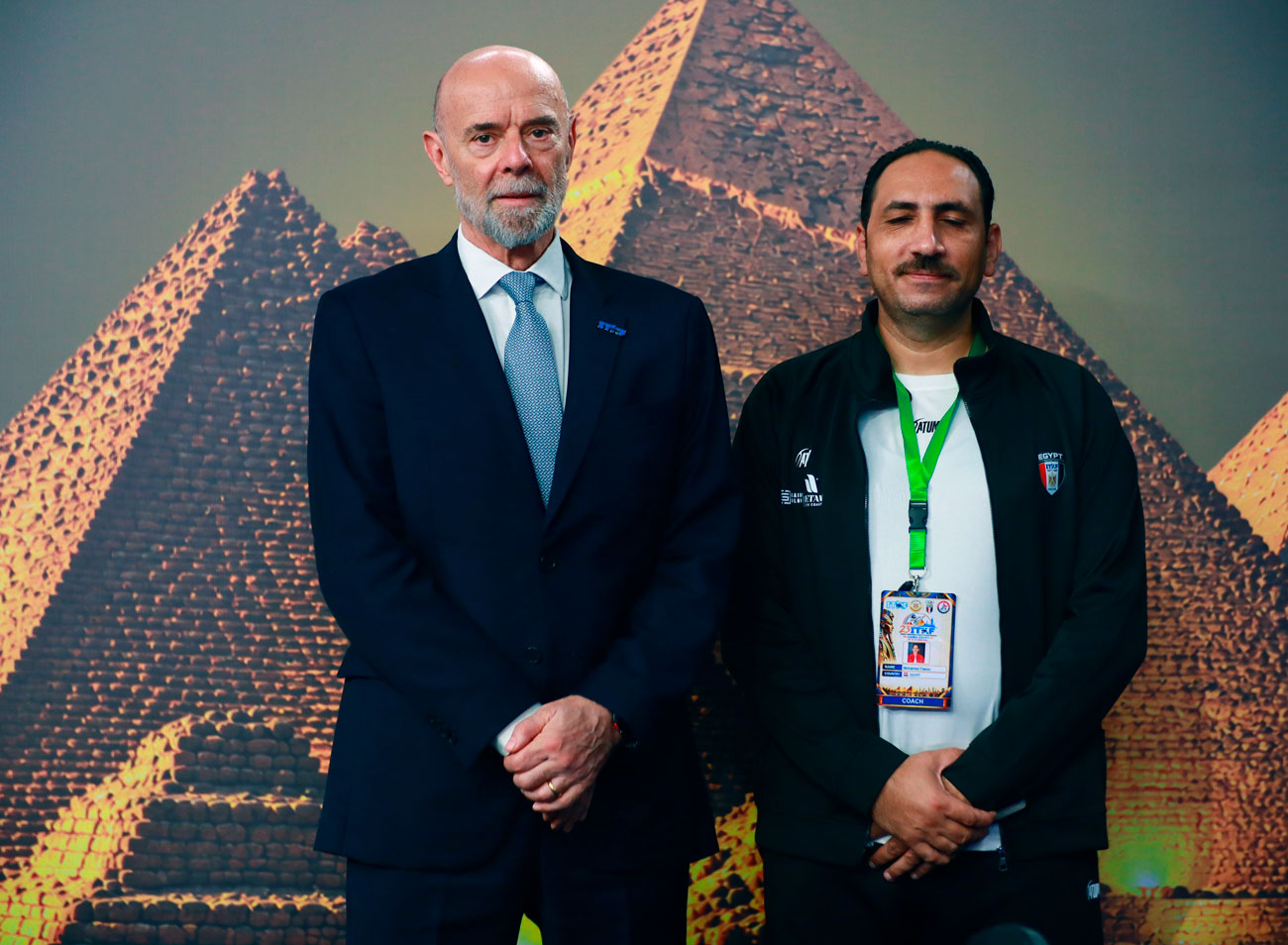
Eric Bortels thanked Luiz Alberto Küster, secretary general of ITKF Global, and Mohamed Fawzy Ali, technical director of the Egyptian national team, for making room for i-Karate at the World Championship © ETKF
Coach training
The first Train the Trainer course has already taken place in Slovenia. According to Pavlovic, the ITKF is preparing new courses in Egypt, Poland and Portugal. The aim is to train instructors who can apply the methodology in their own dojos and pass it on to other professionals, widening access to i-Karate across national federations.
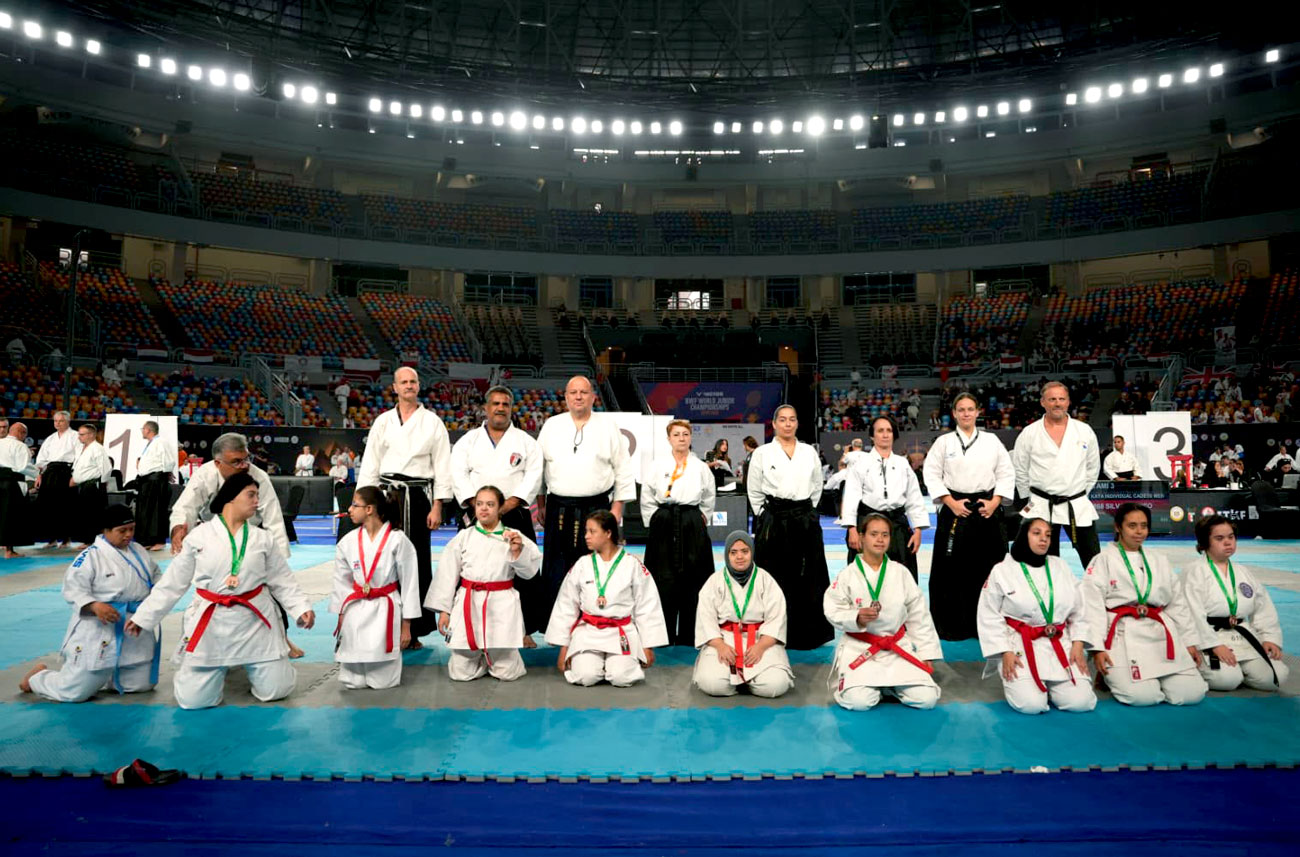
ITKF referees and athletes after competition in one of the i-Karate categories © ETKF
“A good coach is essential to any karate athlete’s development. In i-Karate, the methodology and the ability to adapt it to each person’s needs matter even more,” Pavlovic says.
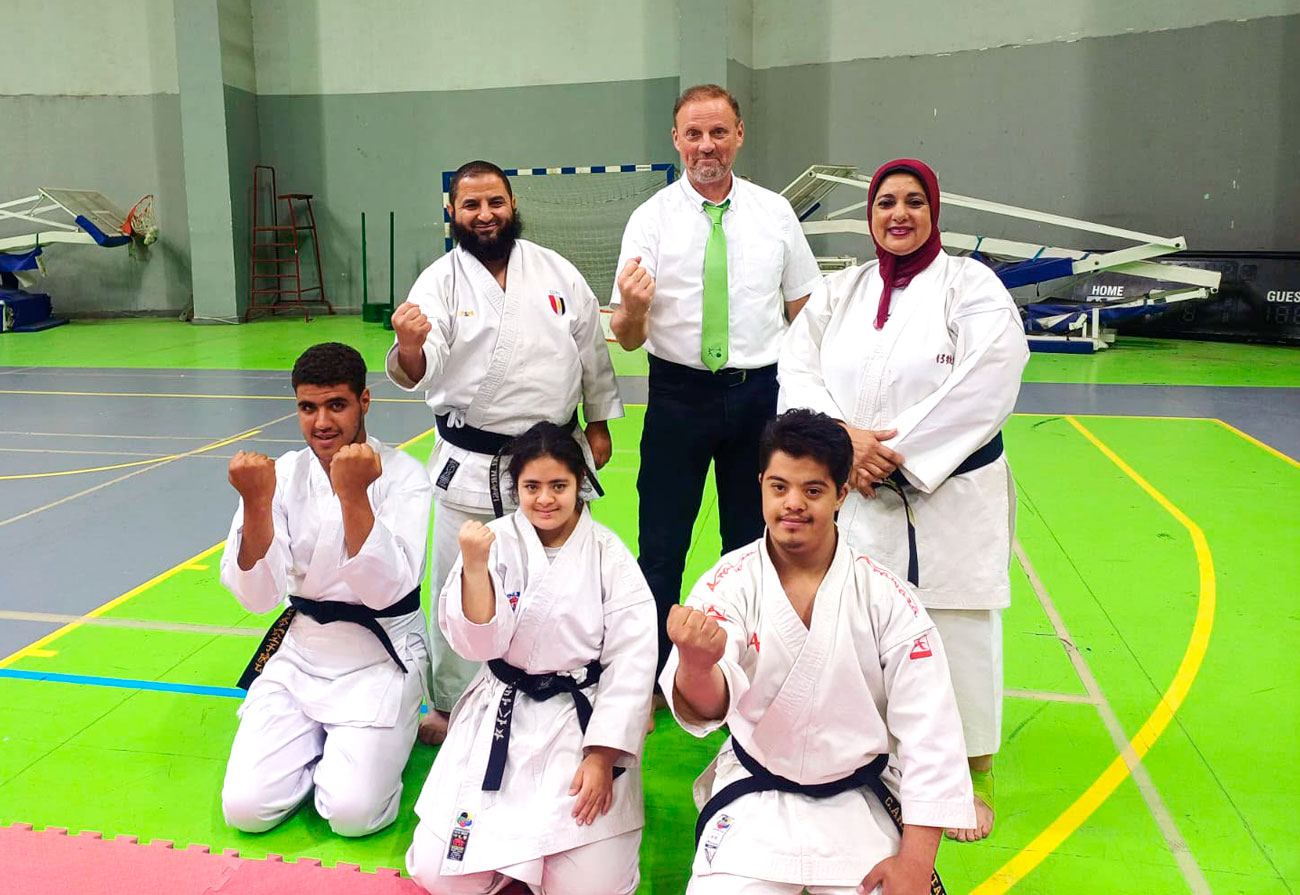
Eric Bortels and Amal Farouq with some of the Egyptian athletes during classification © ETKF
“To work in this area, an instructor needs to enjoy karate, have empathy, be willing to support their students and, of course, learn the methodology. That is why structured training is so important.”
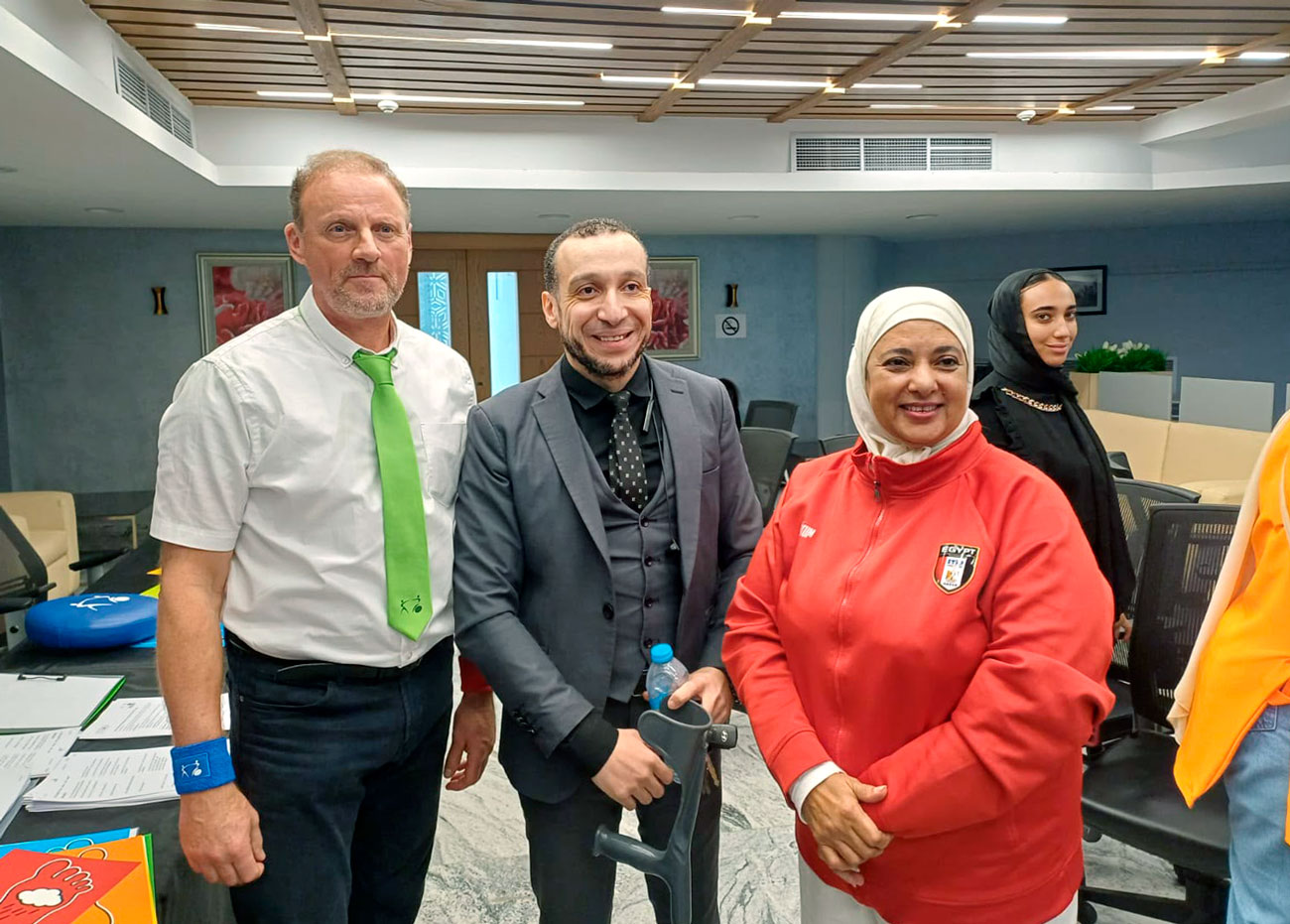
i-Karate set a new milestone for the ITKF by welcoming athletes with disabilities and expanding their opportunities to compete, reaffirming the human and social role of sport © ETKF
The dates and venues for the next courses will be announced as they are confirmed. Pavlovic says federations interested in holding a course in their own country can already contact the ITKF i-Karate Commission. “In every country where the ITKF has affiliated organisations, there are people who could benefit from this work. In many cases, what is missing is access to coaches trained to work with people with different disabilities.”
“Everyone deserves a chance to take part in i-Karate competitions,” Eric Bortels concluded.
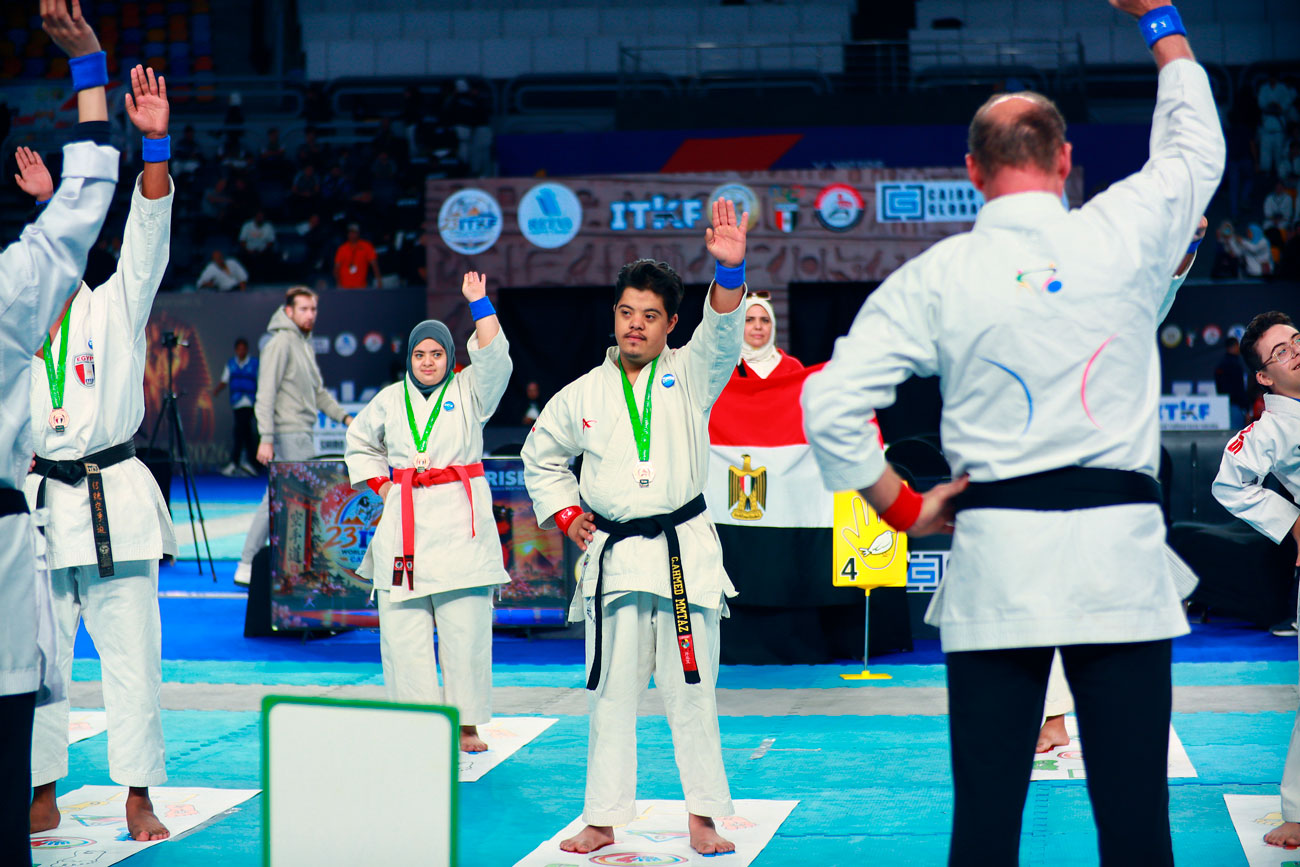
A demonstration of the i-Karate methodology during the opening ceremony of the 23rd ITKF Traditional Karate World Championship © ETKF
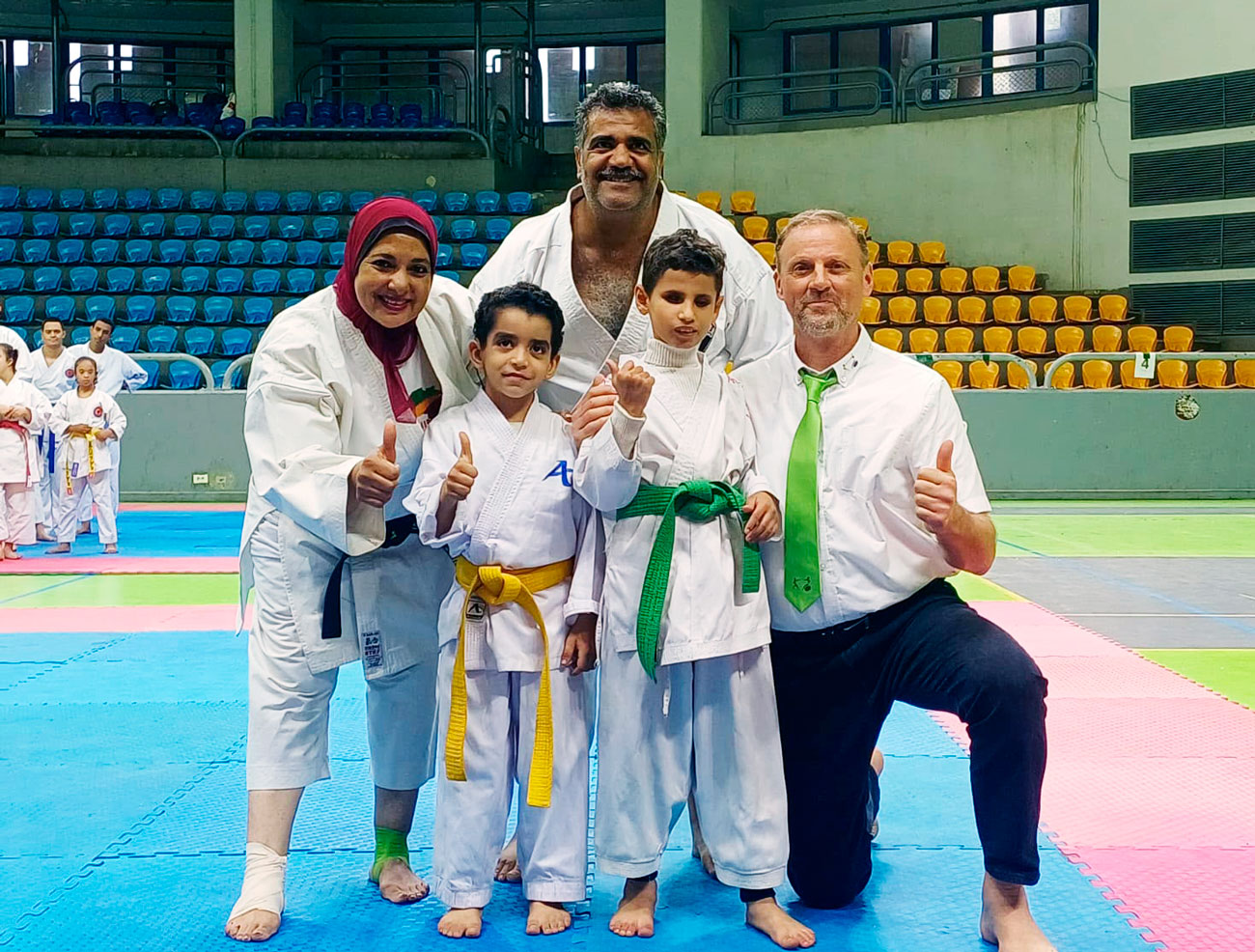
i-Karate gives children with disabilities more opportunities to enjoy sport, make friends, train and compete as part of a team © ETKF
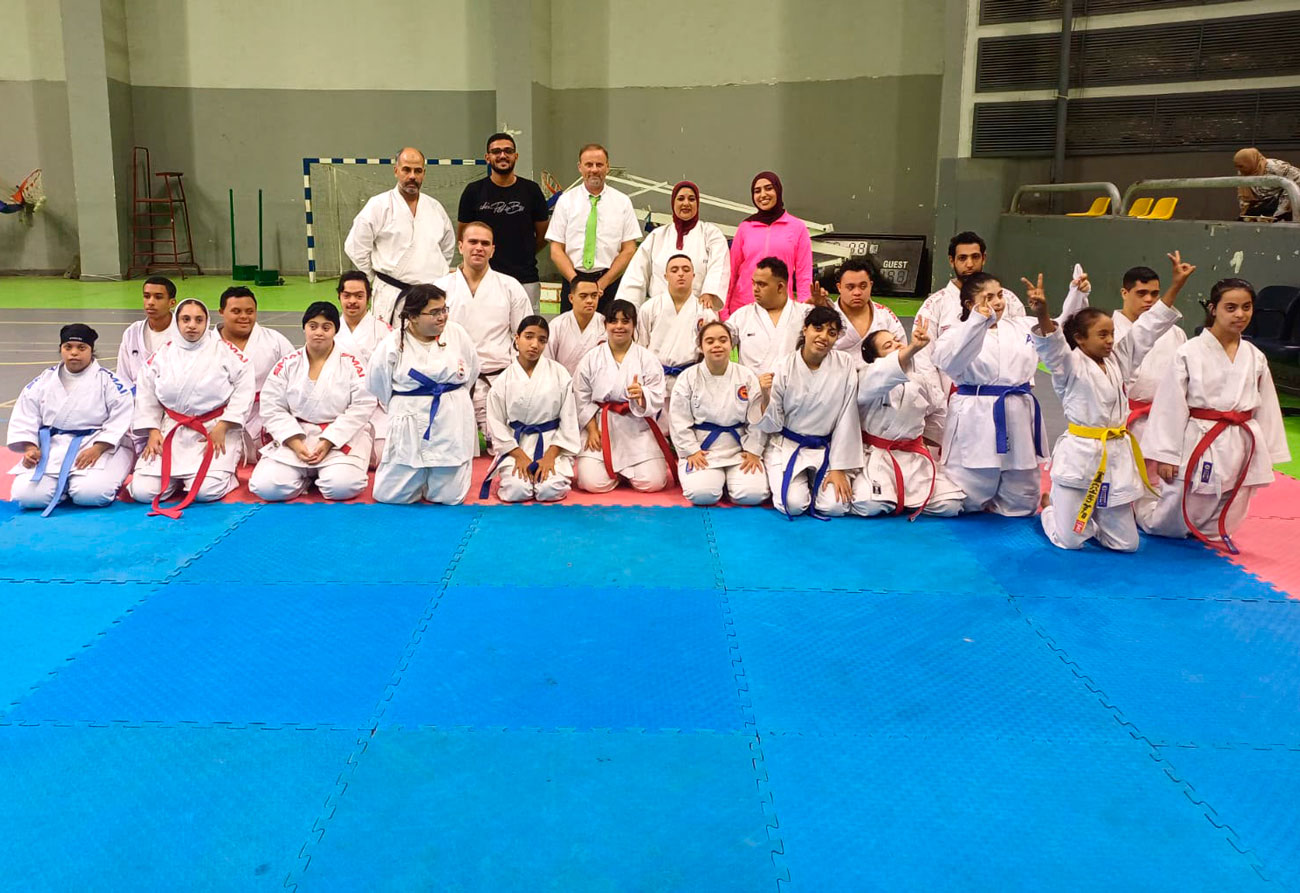
Eric Bortels and Dr Amal Farouq with some of the athletes during i-Karate classification © ETKF